Top
 

Digital Serendipity

Interested in ideas of place, context, and perspective, I wanted to conceptualize a tool for the internet that enabled users to edit and curate the web, and to share individual contributions in a context-driven manner.

Through what would be an exchange of experience, users would create a meaningful and organic network of content curation; an alternative way to explore the web.

 
Group 18.png


Timeline: 8 Months, September 2015 - May 2016

Project Type: Senior Capstone

Metrics: Usability Heuristics

Resources and Tools: Sketch, Flinto

Primary Responsibilities: Identifying Problem/Opportunity Space, Literature Review, Market Research, Ethnographic Research, Problem Framing, Wireframing, Prototyping, Usability Testing


The Web's Place-ness

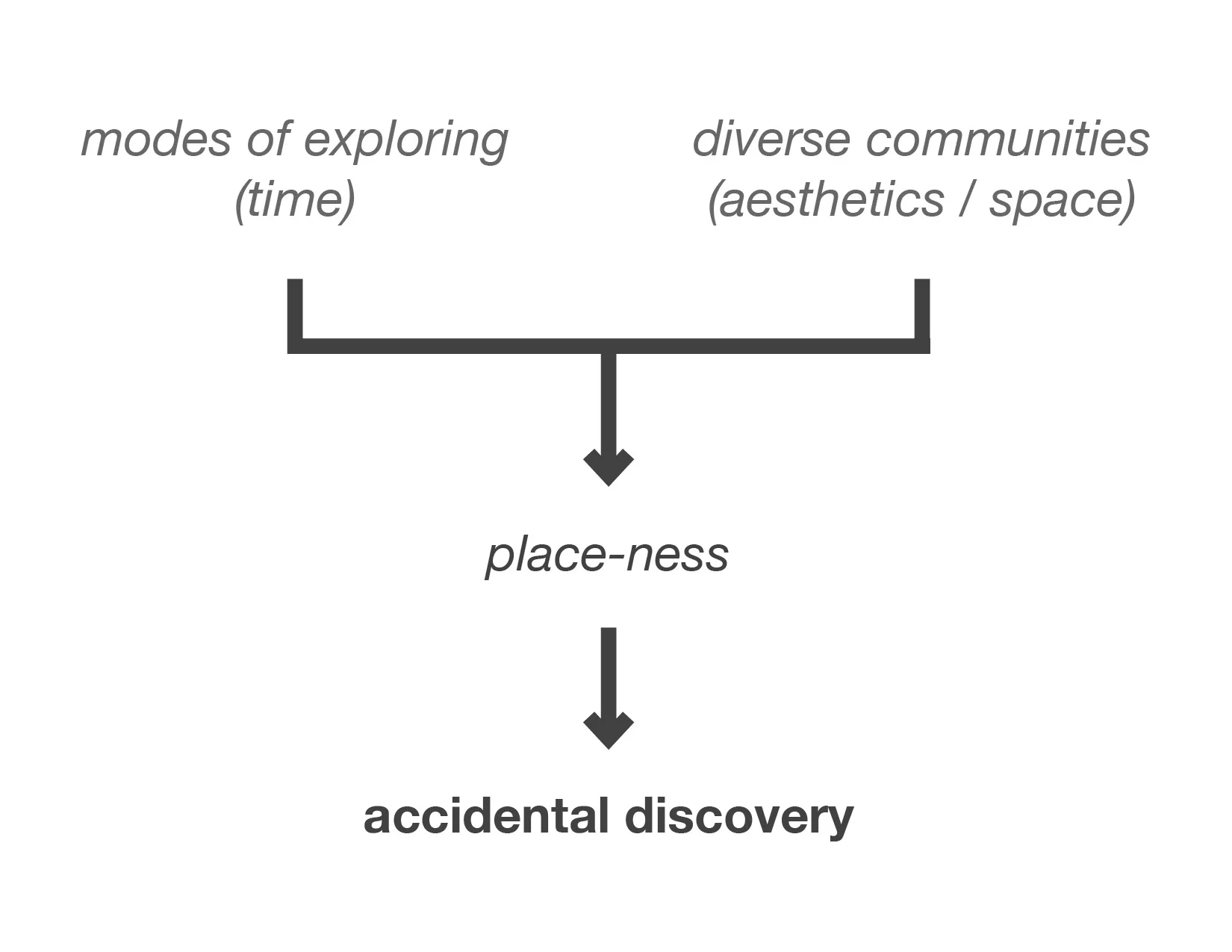
The Internet contains and cultivates communities of interest and aesthetic. And as a result of the effect of navigating the web, these communities turn into destinations, or places we travel to. The Internet has a "place-ness" that contributes to the Internet's capacity to be discovered. Observing this led me to understand more about what could aid discovering it.

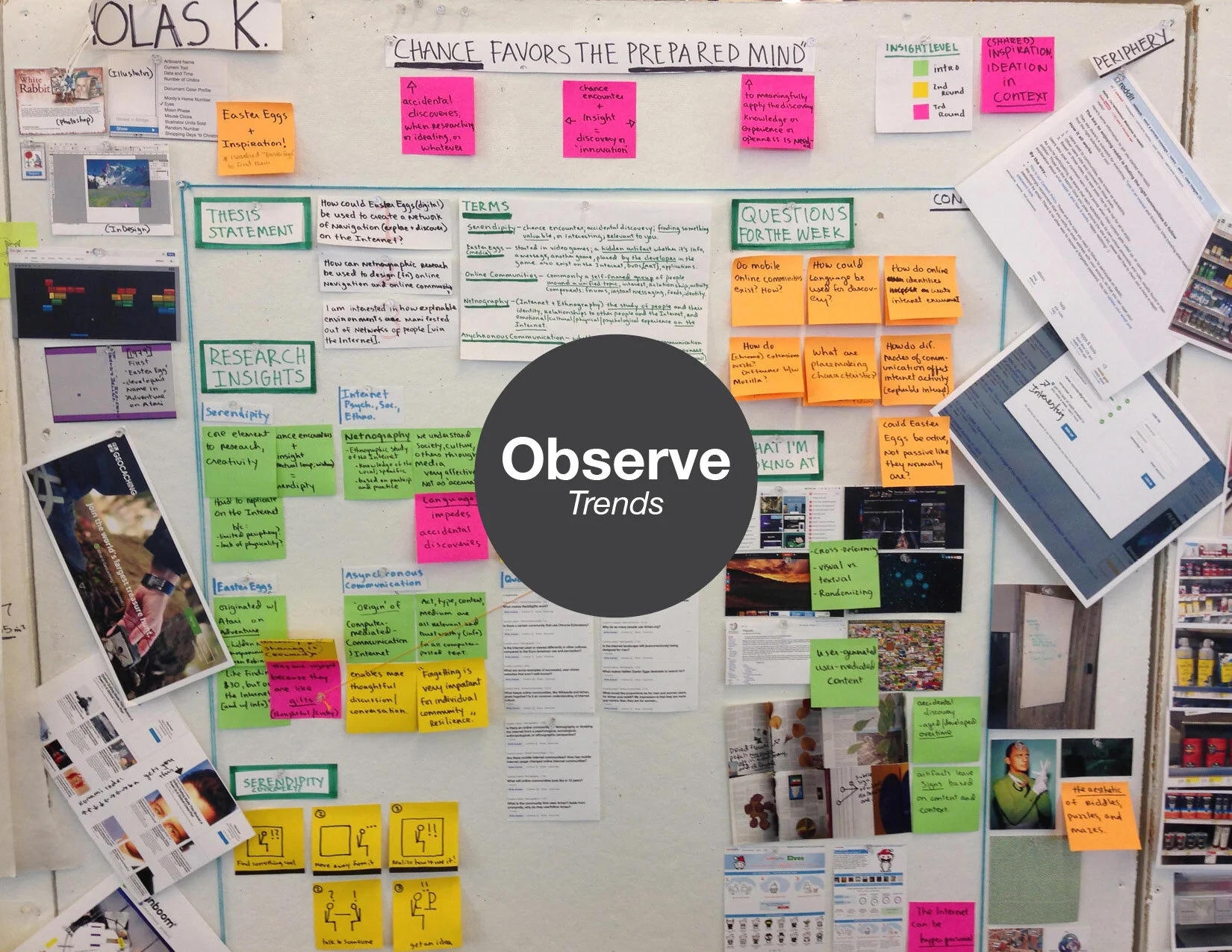
I became interested in designing for discovery on the Internet, so I began to look for examples of existing platforms that tried to create an environment conducive for discovery. 

Understanding Users

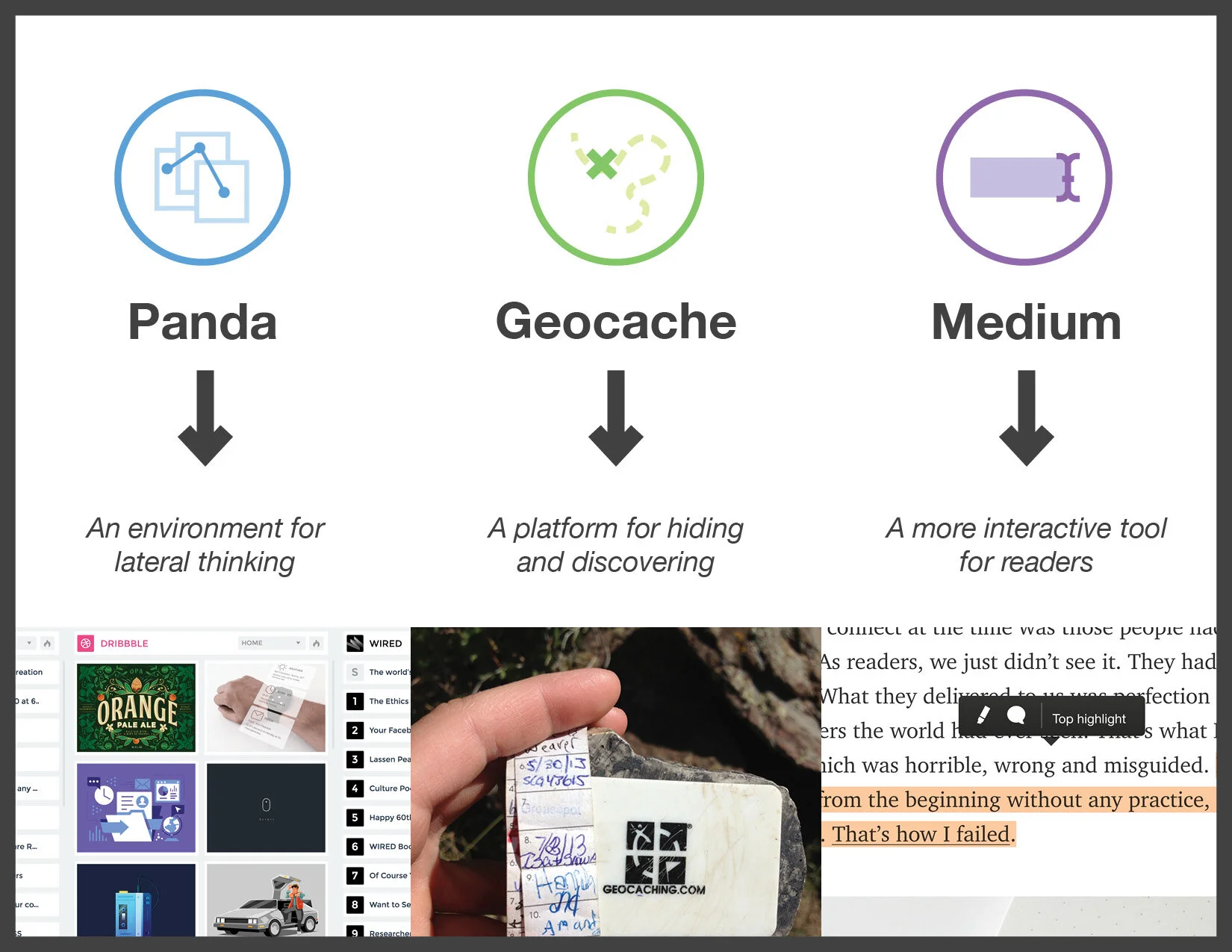
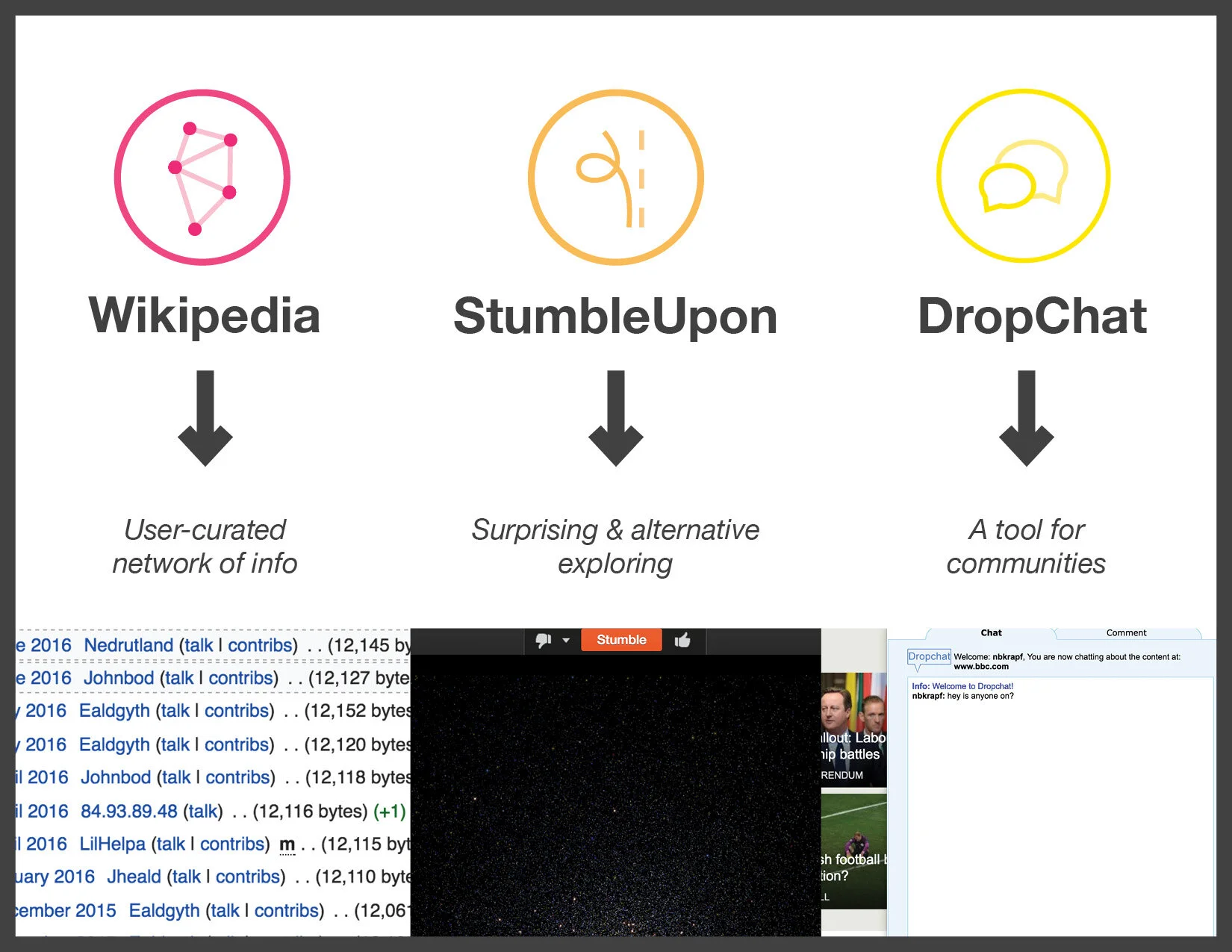
My search for platforms and tools left me looking for an exploring experience that was user-driven like Wikipedia, and contextual Medium or Panda, while affecting a reach on the web like plugins often do.

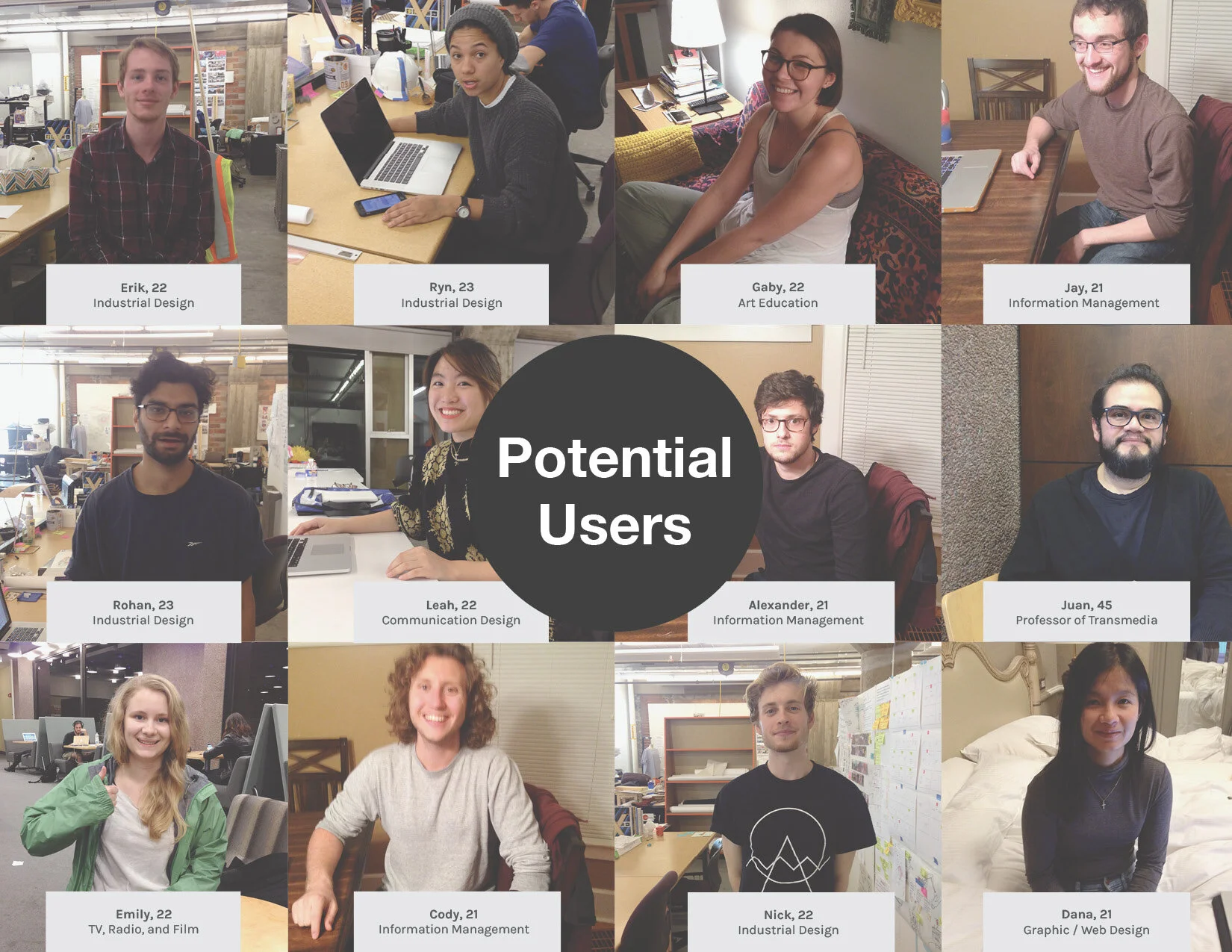
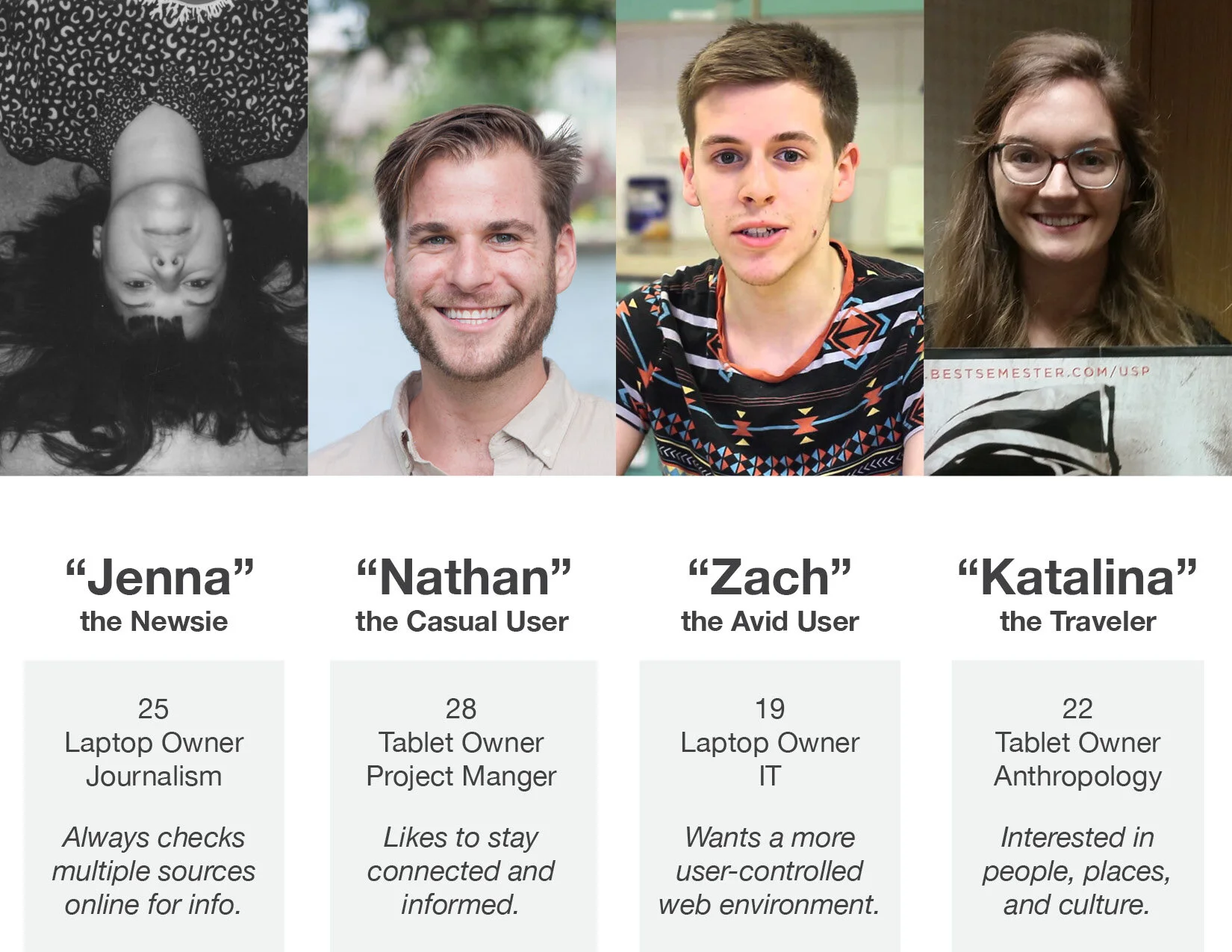
I wanted to know who would discover differently online, so I conducted surveys and interviews to define a set of user groups that might enjoy or benefit from using a new web discovering tool.

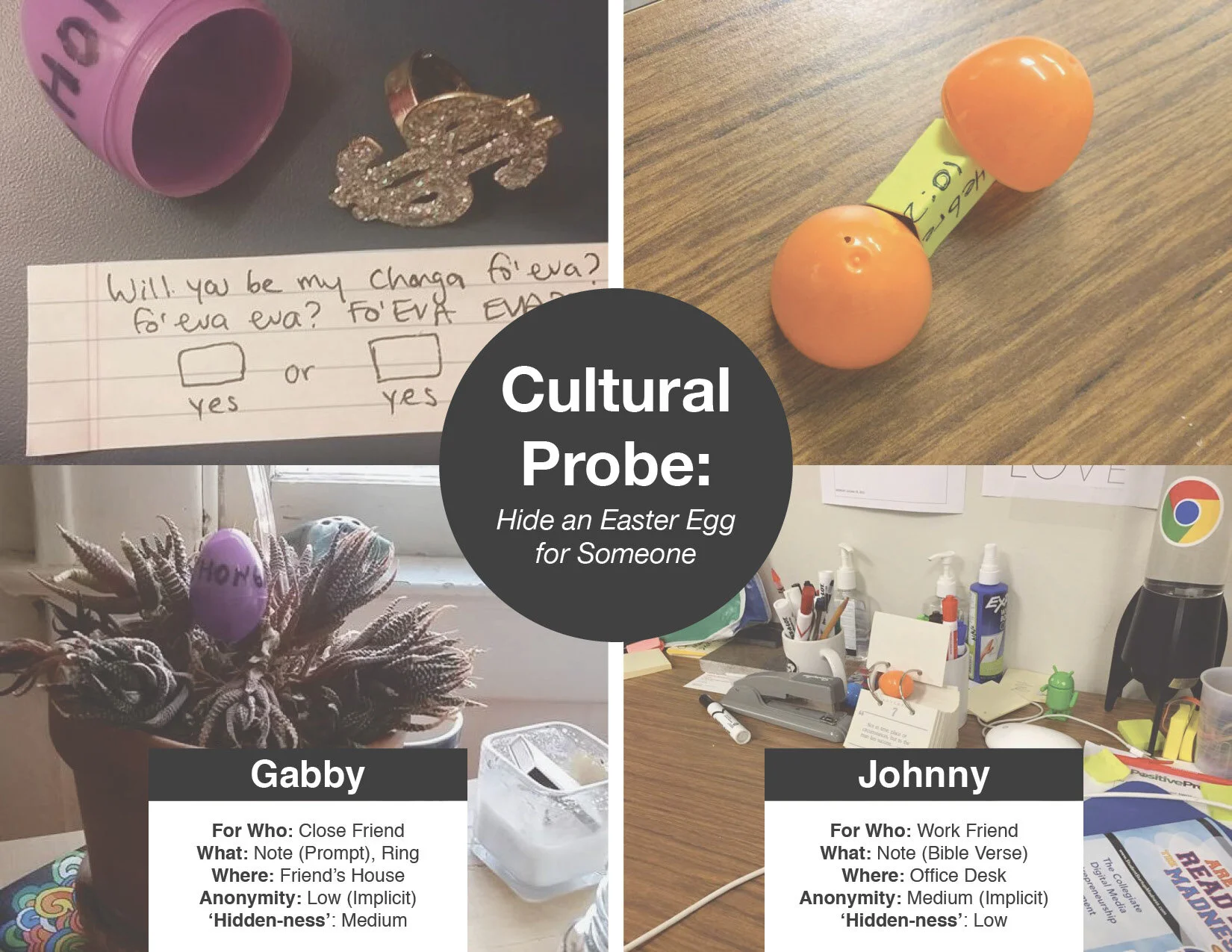
Having a better sense of who I would target for a new online tool, I wanted to learn more about the behavior of these user groups related to discovery. I conducted a cultural probe to better understand what discovery meant to people and how people wanted to create discovery.

Cultural Probe

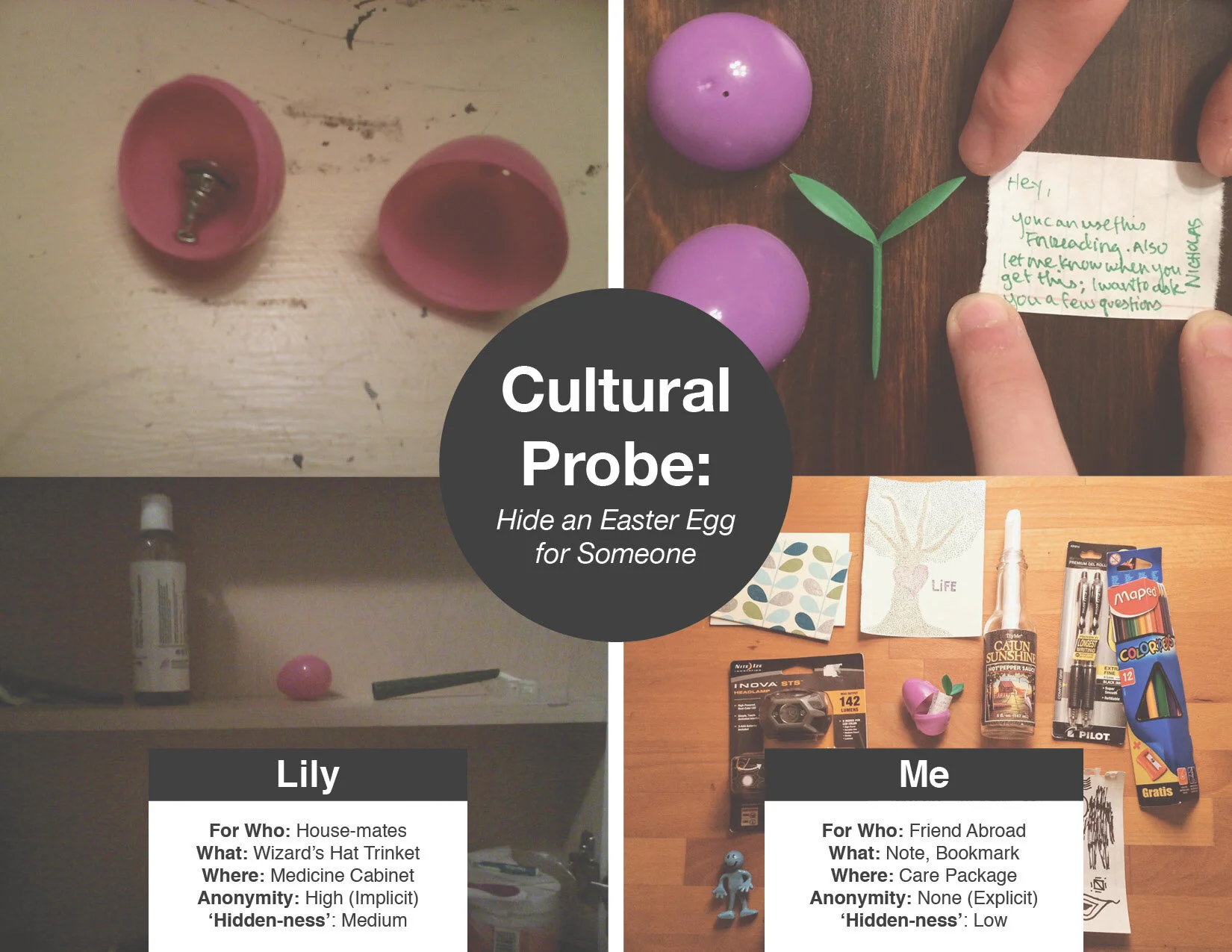
I asked 4 separate participants to use a plastic Easter egg to hide a message of some kind. They could do whatever they wanted with the egg, as long as the egg was intended to be found by someone specific. Participants took pictures of the egg’s content and hiding place of the egg.

The experiment took place over a 2-week period, and I rated each study by anonymity (or how easily the discoverer could identify the hider) and obscurity (how easy the egg was to discover). What would people do?

Through conducting this hiding and discovering cultural probe, I learned that discovery has an inherit social dimension to it. I also learned that my participant group tried not to make the eggs too difficult to find or attribute to someone. In other words, not only do people want to express themselves through the things they hide and find, but also, most people want to be credited with a discovery, either as a 'hider' or 'discoverer'.

Discovering, Exploring, and Refining

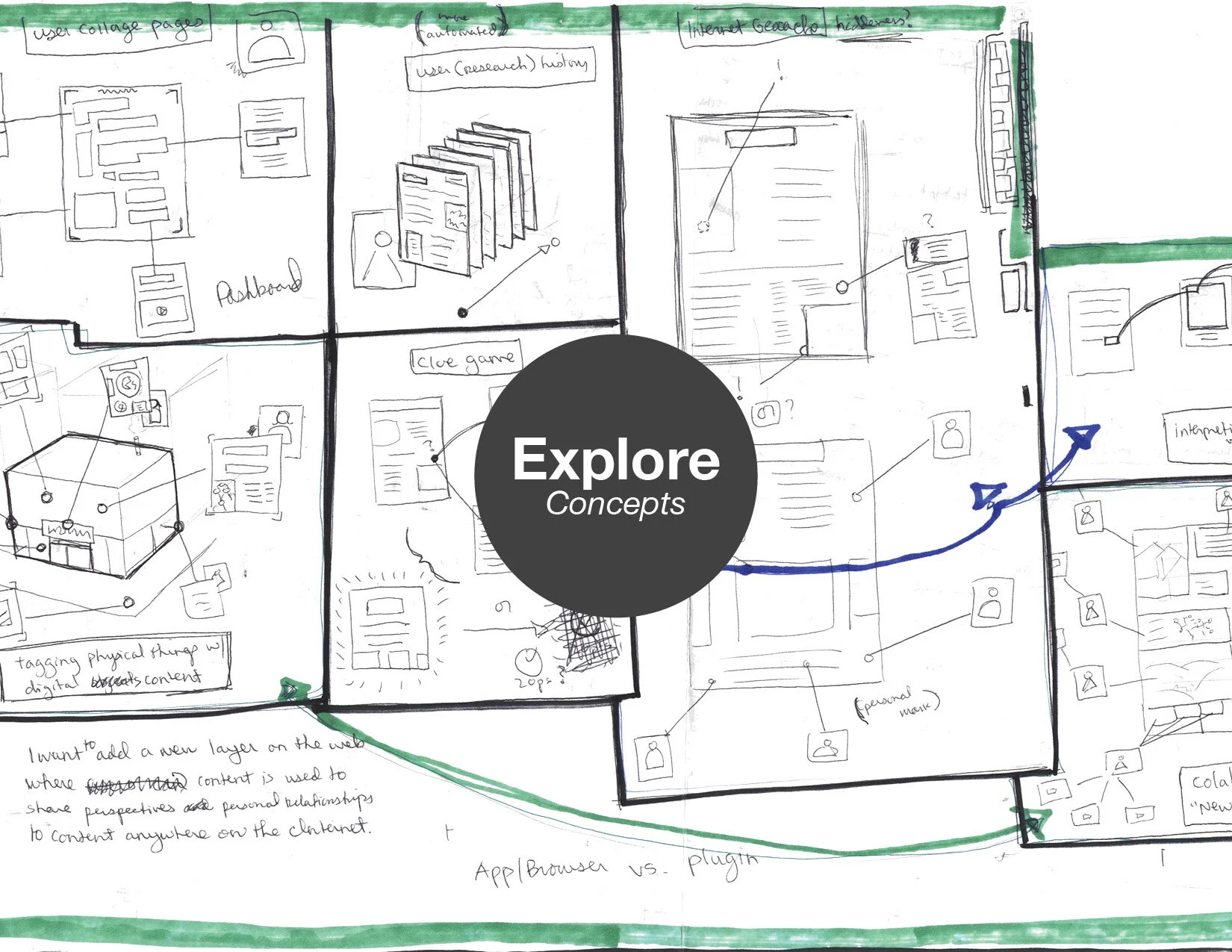
The Internet is interesting because of its users; the experiences they've had, the places they've come from. I wanted to design something that used these unique perspectives, not just the authors of content, but the readers, to enliven and contextualize the mode exploring the web.

I began to circle around a concept for a browser plugin that let readers link content, in articles or on images, in an interpretive way. And through the links being contextualized by their surrounding content, they would also be semi-relevant to the content, adding another layer (figuratively and literally) to the normal web-viewing experience. 

5 Rounds of Iteration

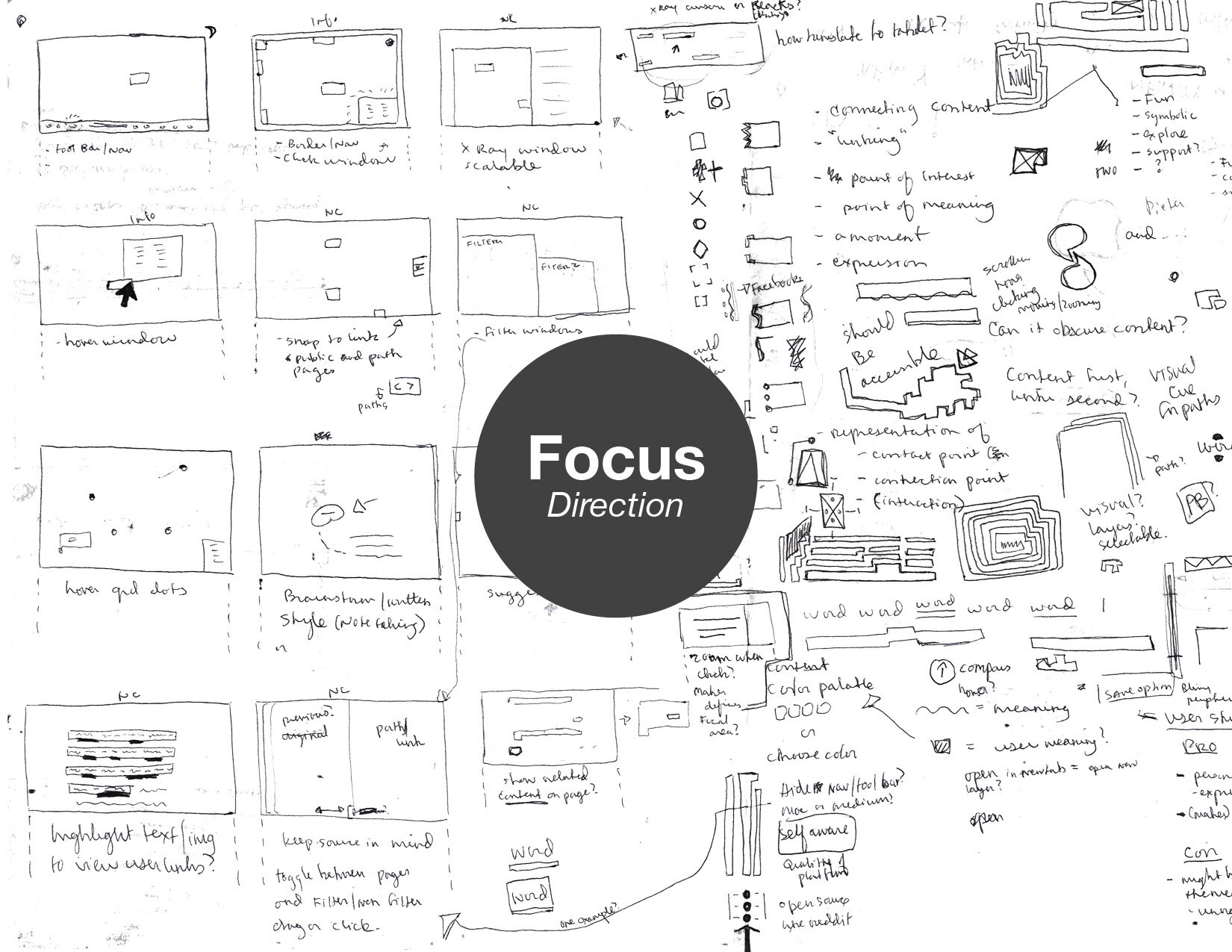
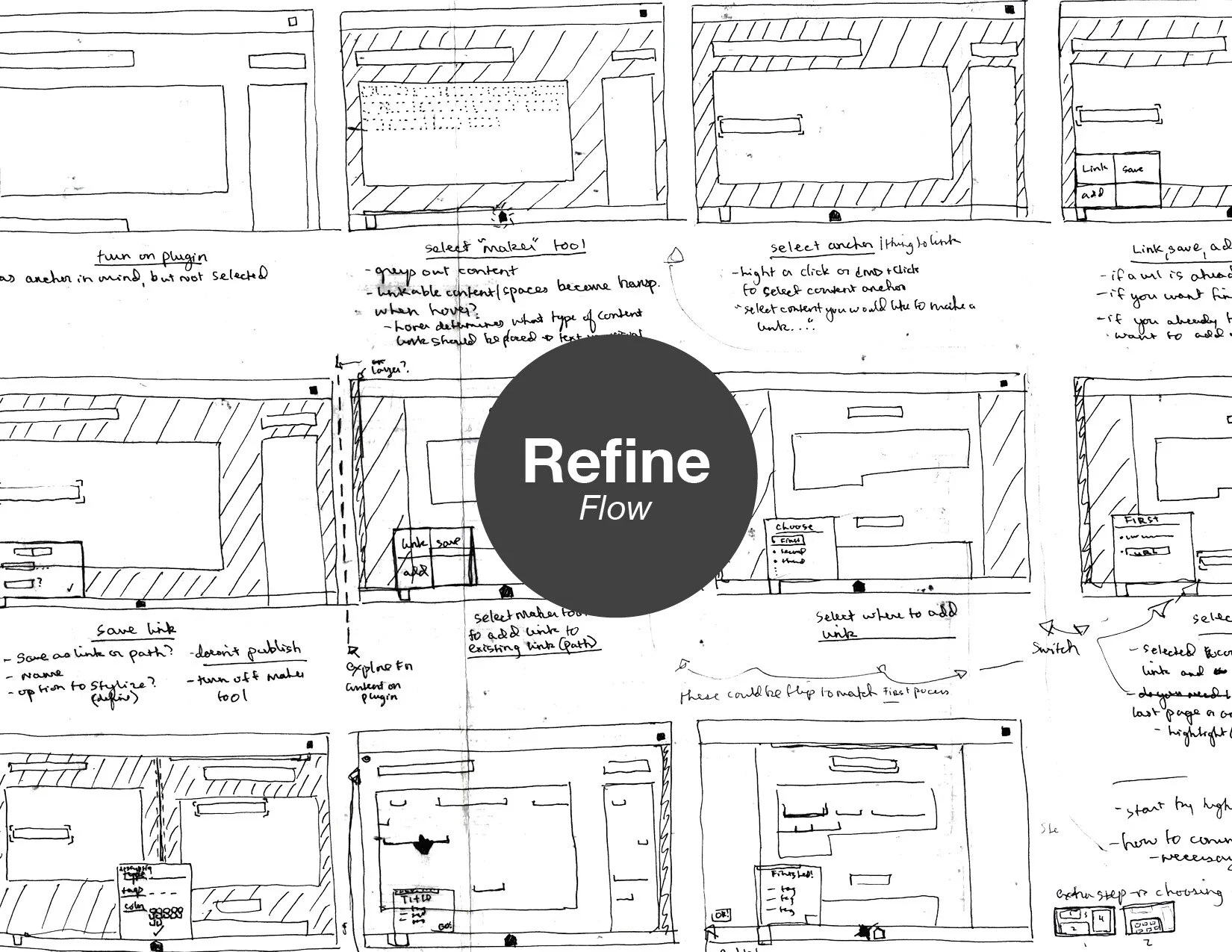
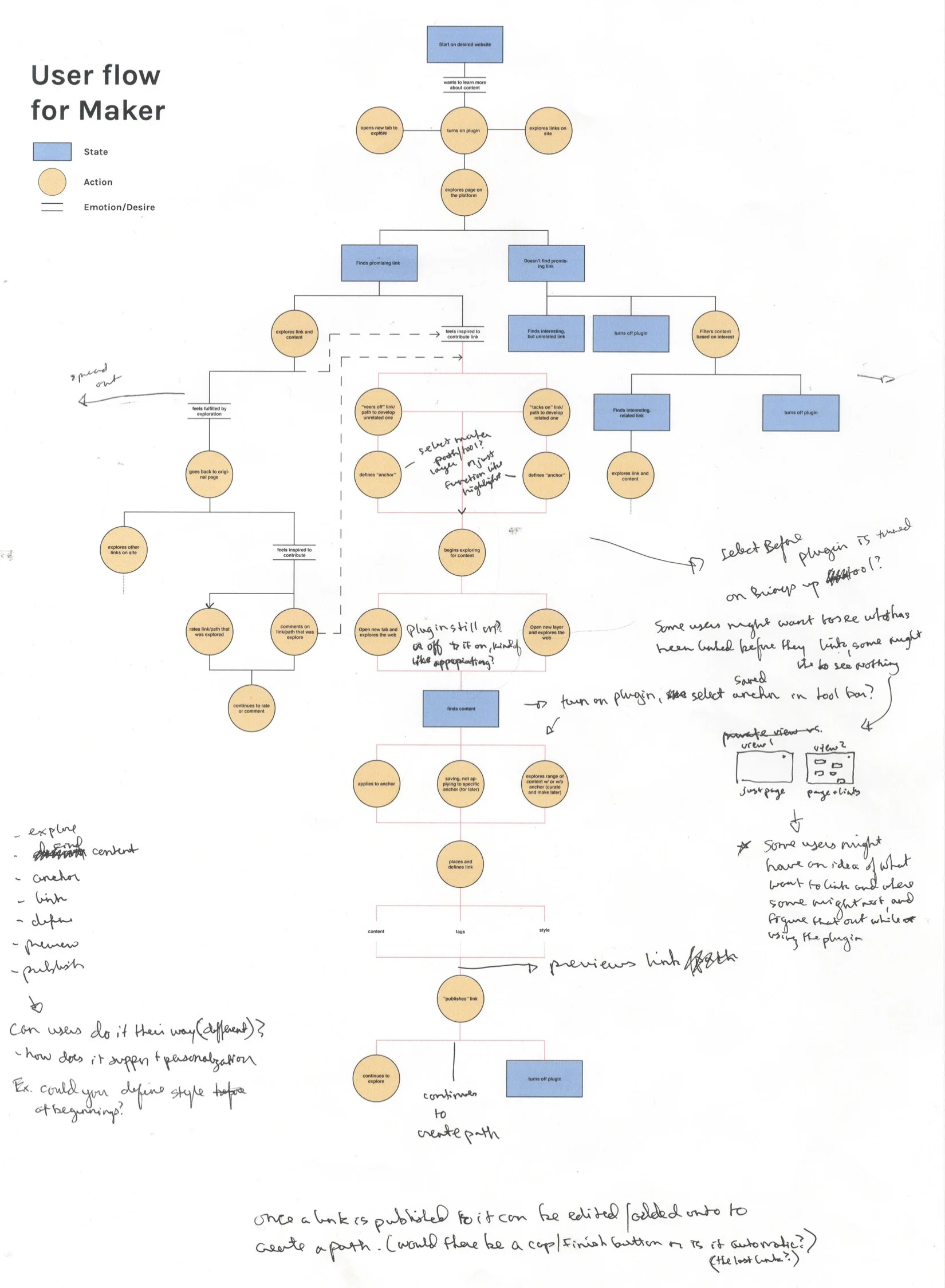
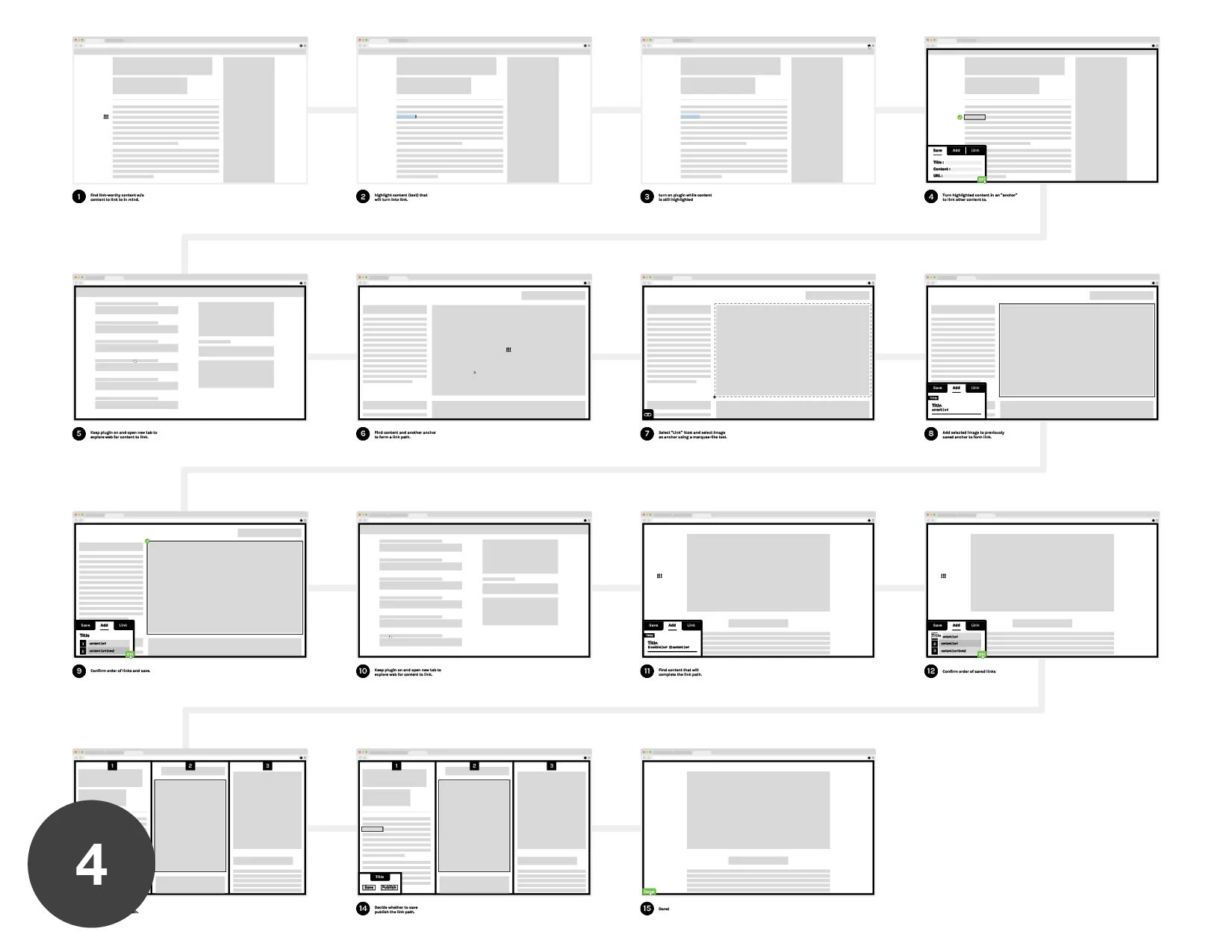
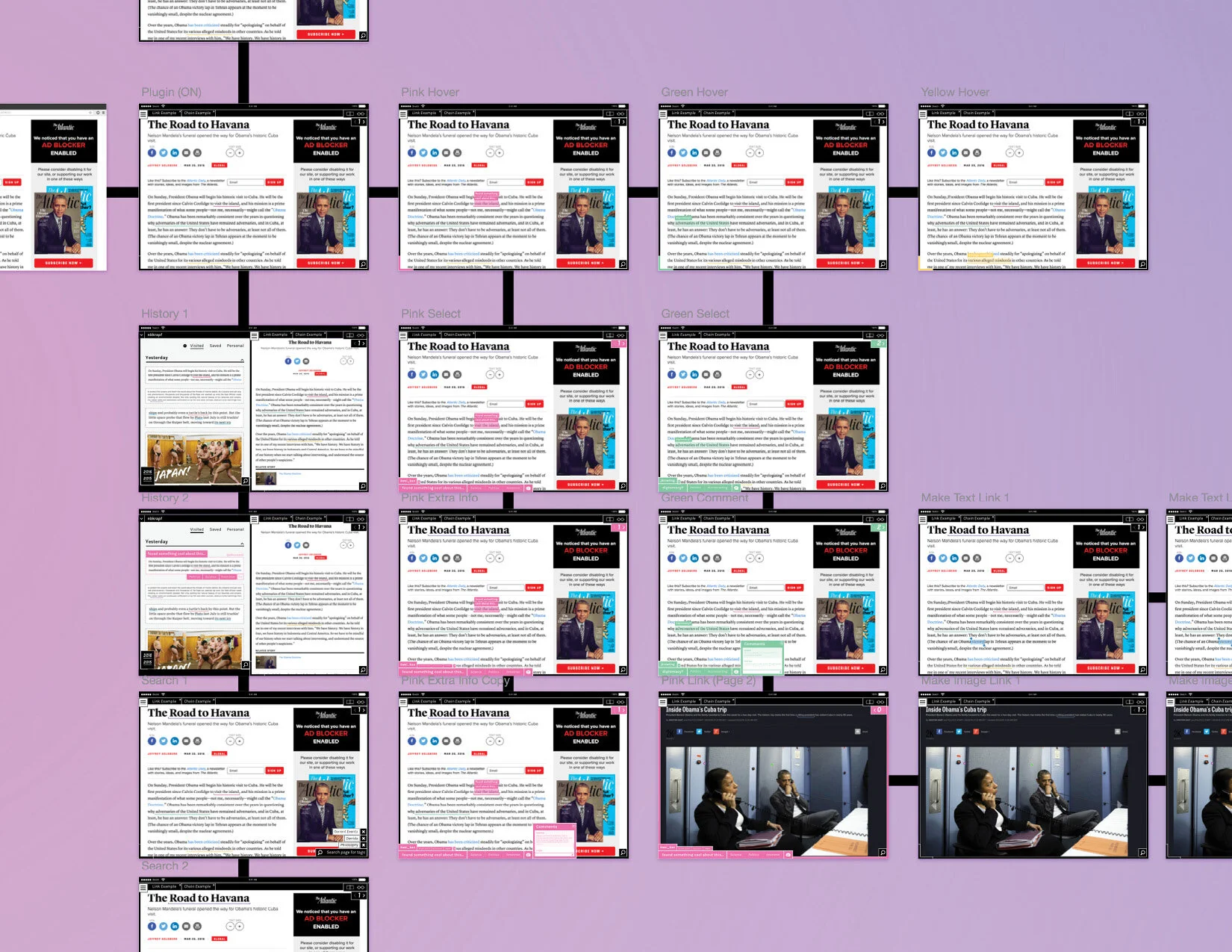
At this point in the process, my concept was becoming more refined, and so I generated a user flow to continue refining the design, while still making edits, naturally!

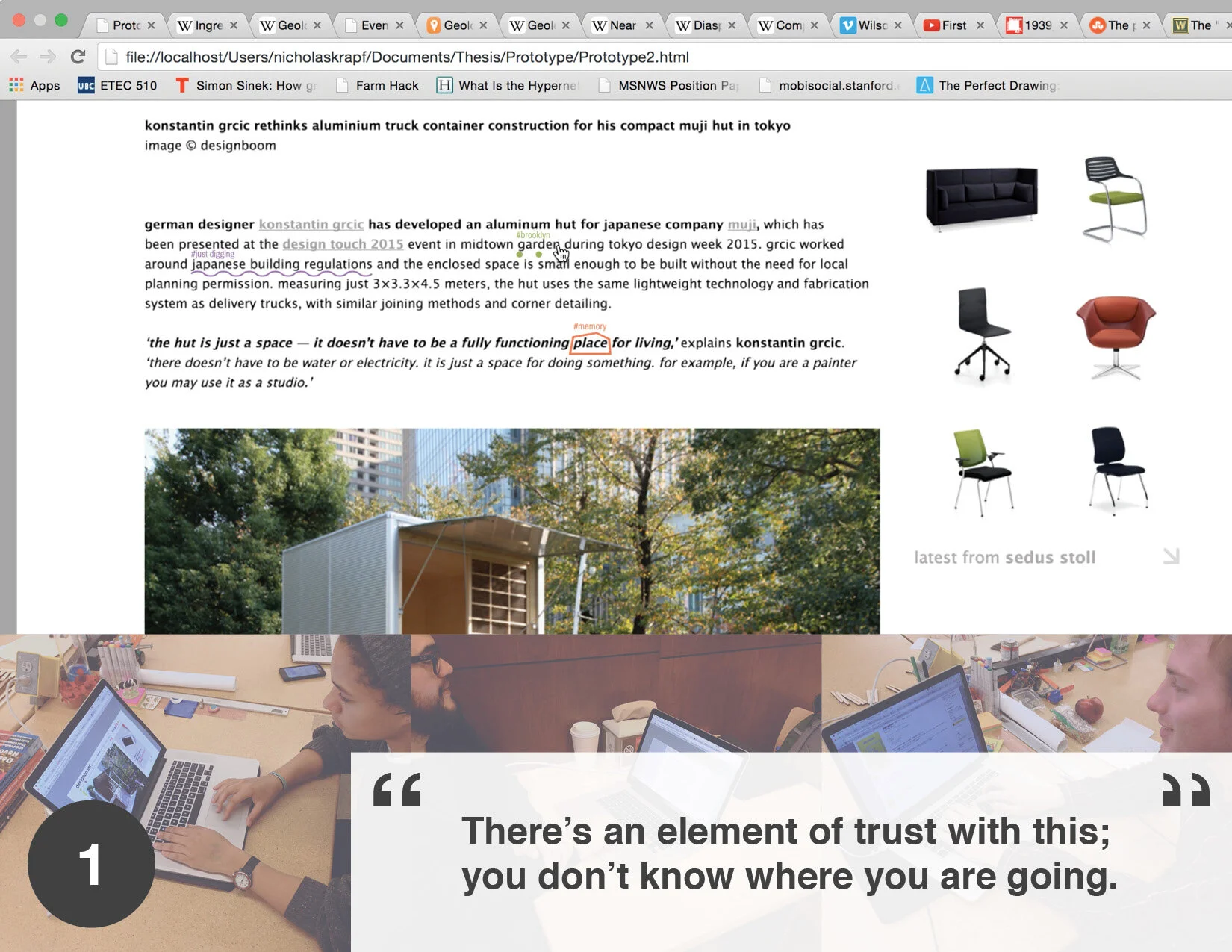
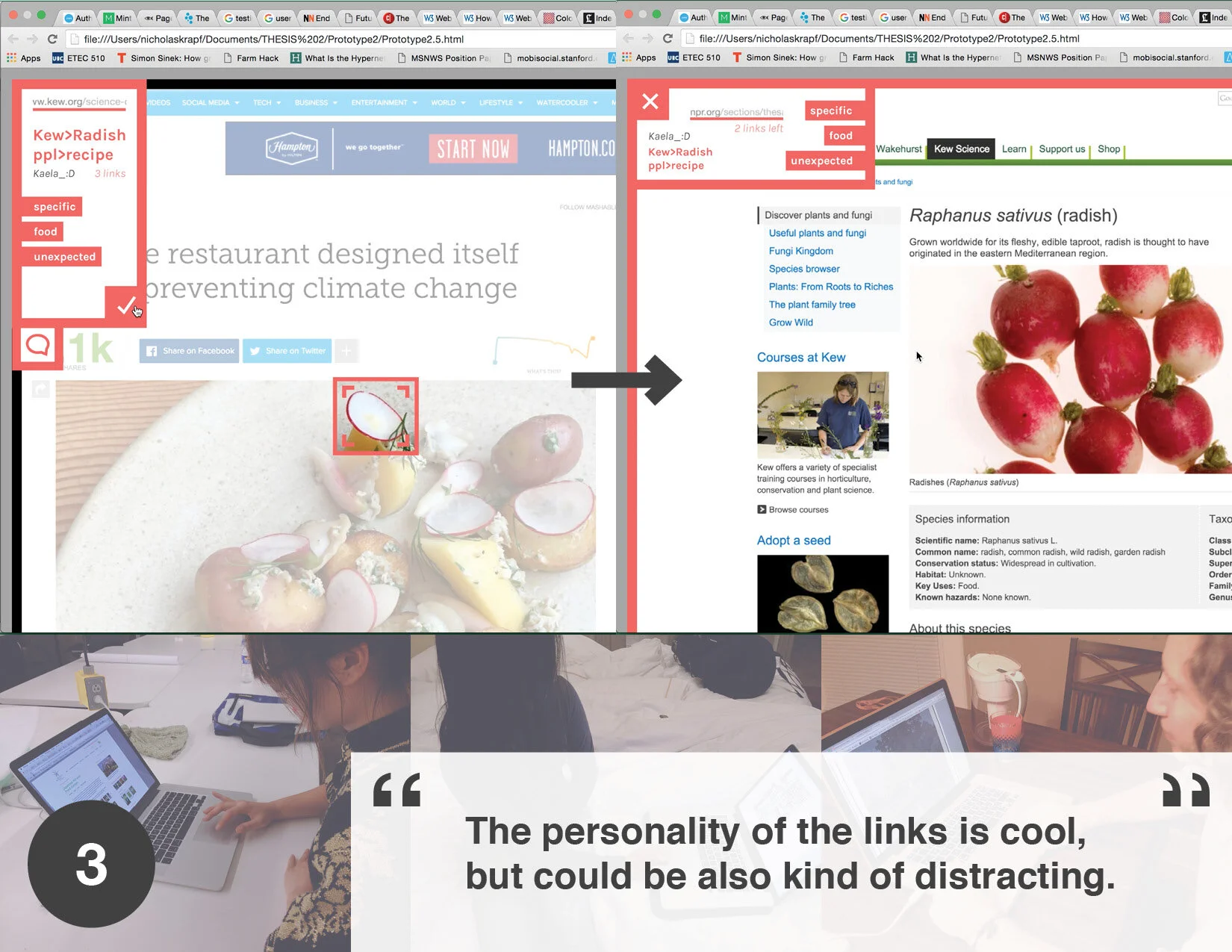
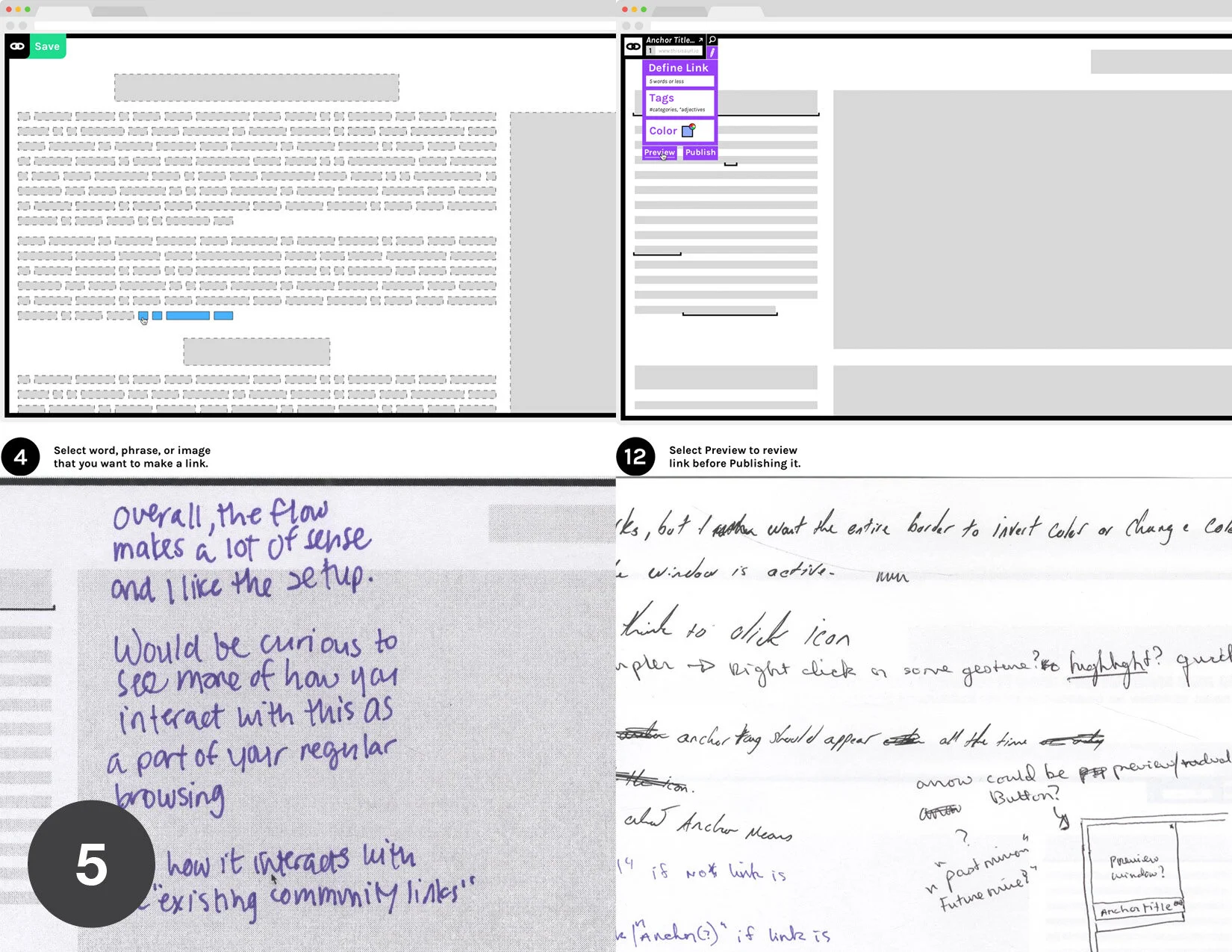
I went through a few phases of prototyping and user testing, with each slowly evolving my original browser plugin concept. 

The Final Iteration 

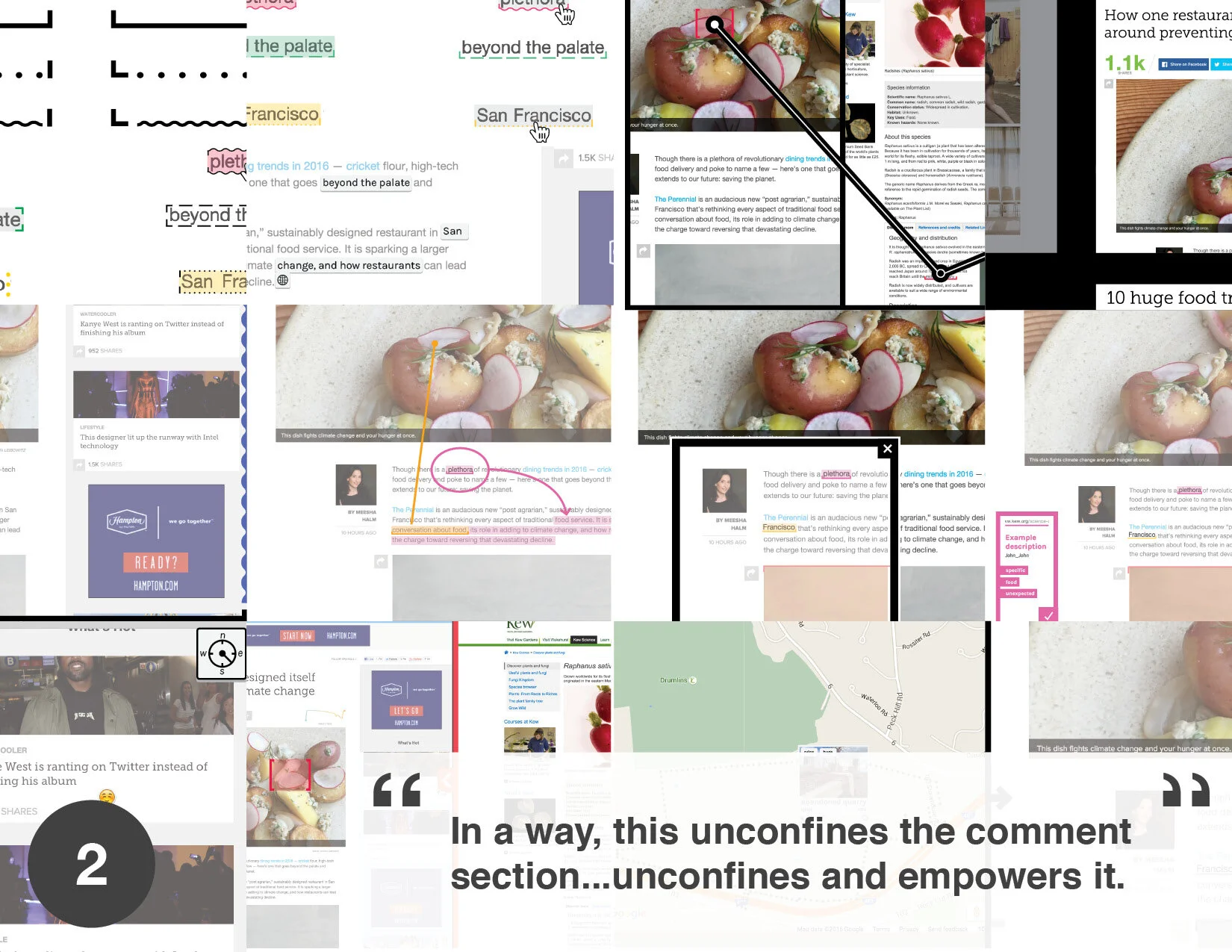
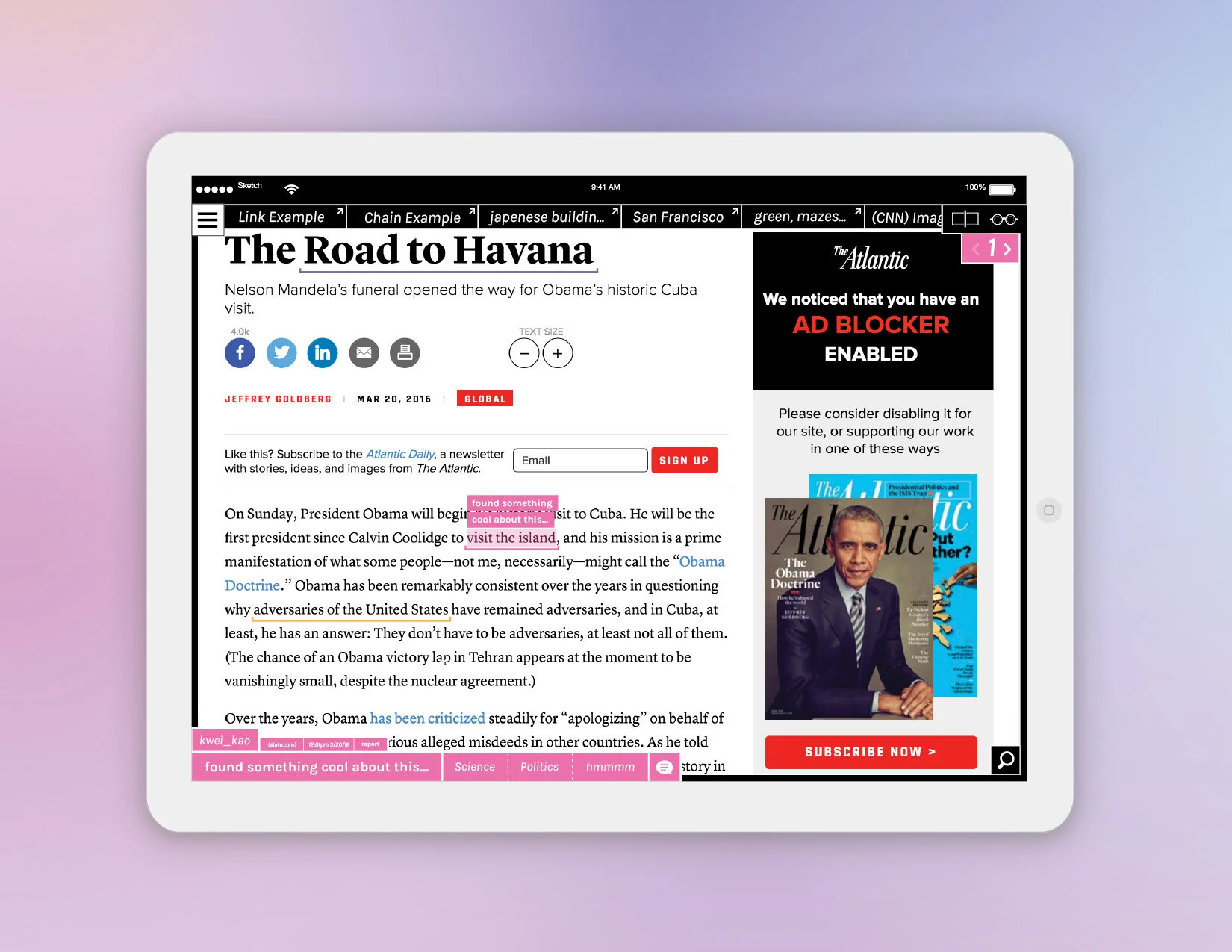
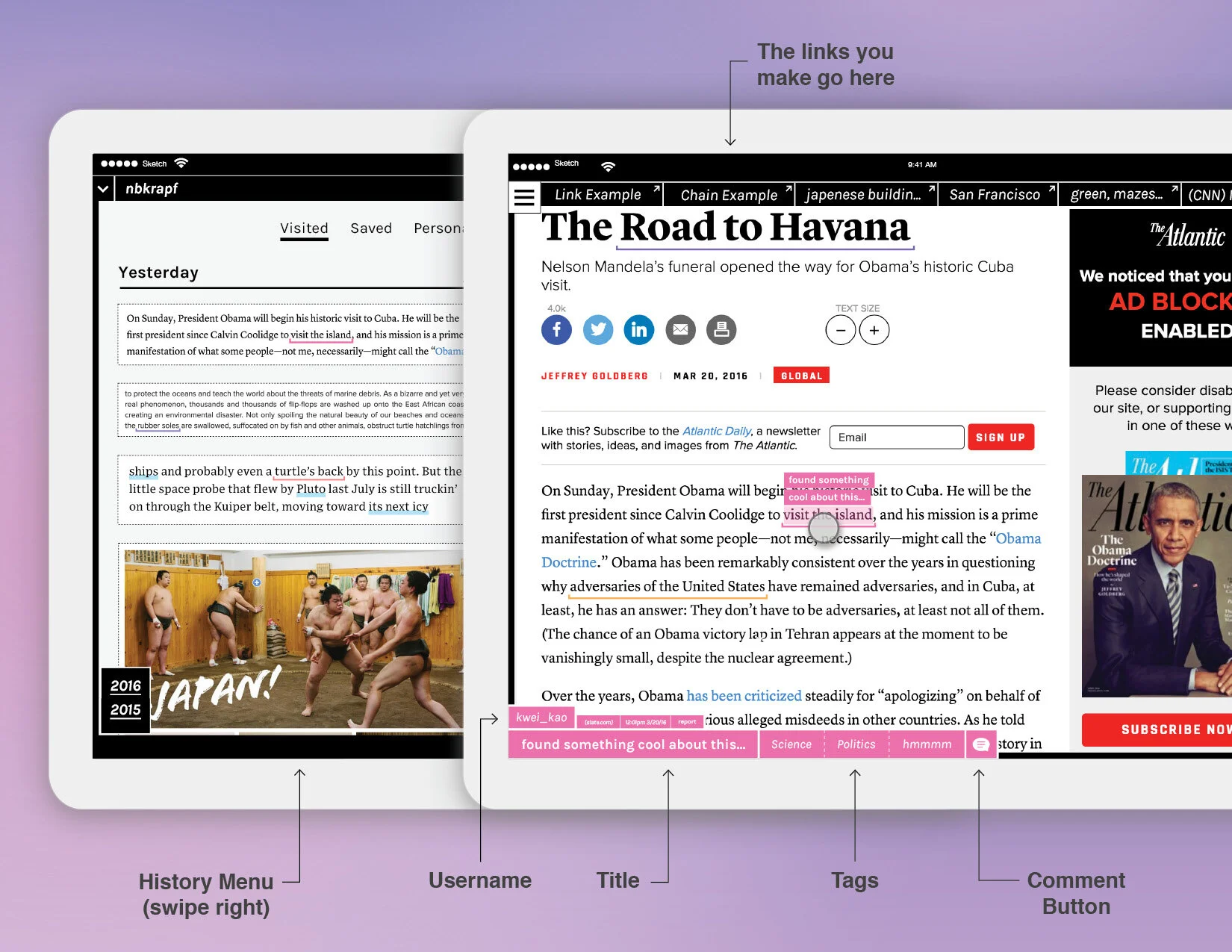
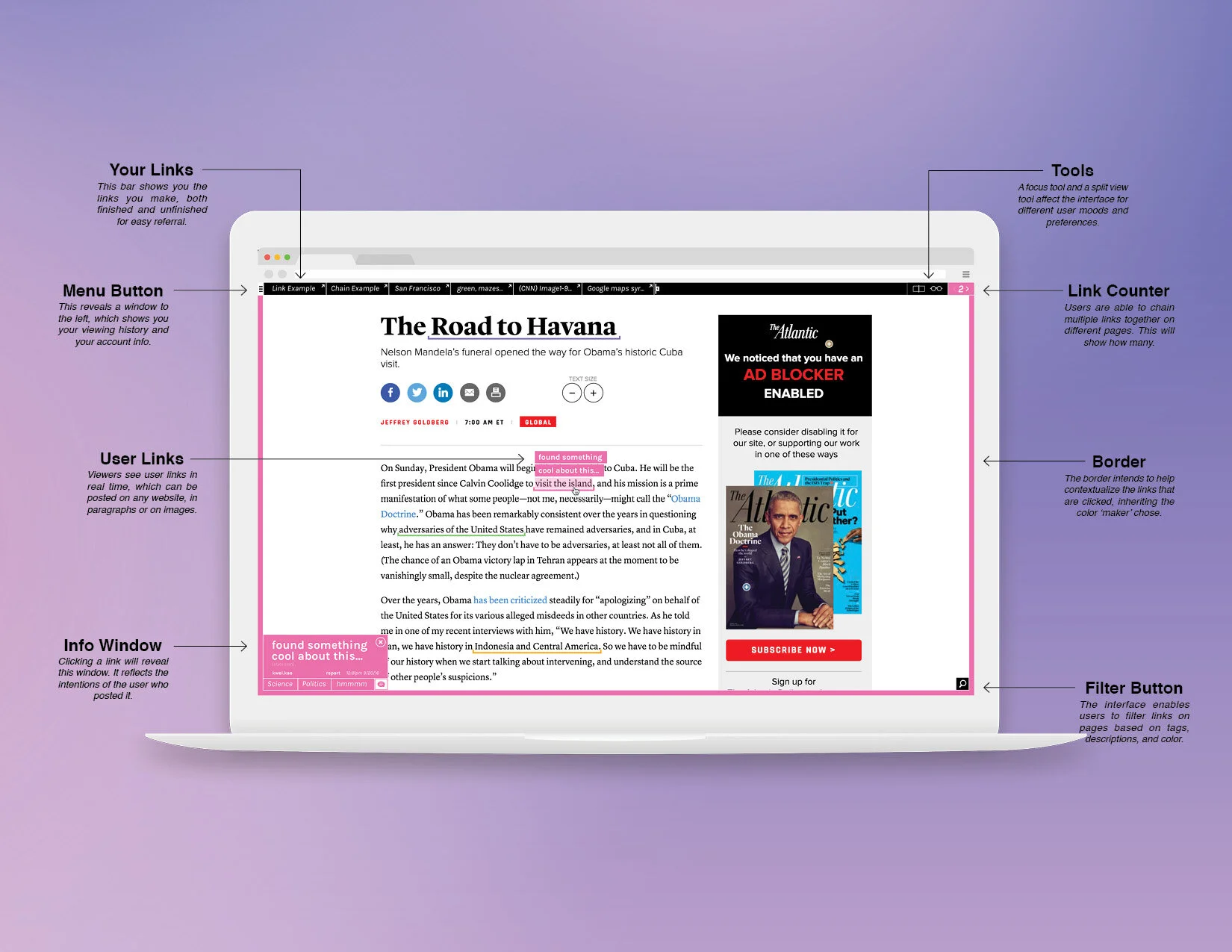
The final design was a plugin that aimed to cultivate exploring through a more user-curated web experience, one that could offer new opportunities for discovery. 

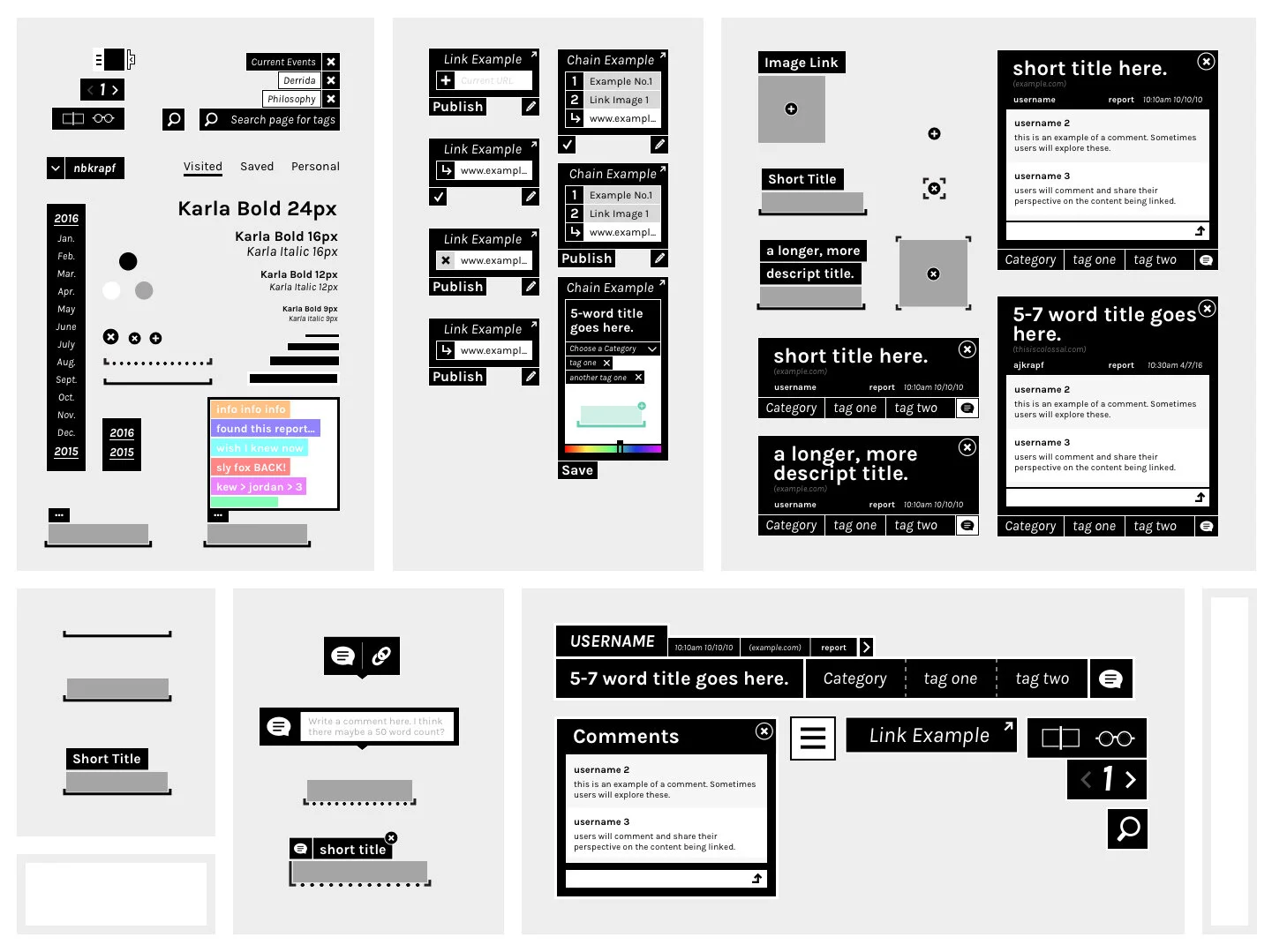
The plugin would enable users post links on [top of] any website, either in paragraphs or on images, and personalize them in a way that reflected their perspective of the content. What would form is an interpretive network of hyperlinks that could be accessed whenever desired, via turning the plugin on or off.

Further Interest: Research Book

I put together a comprehensive book for the research portion of this project. Take a look!

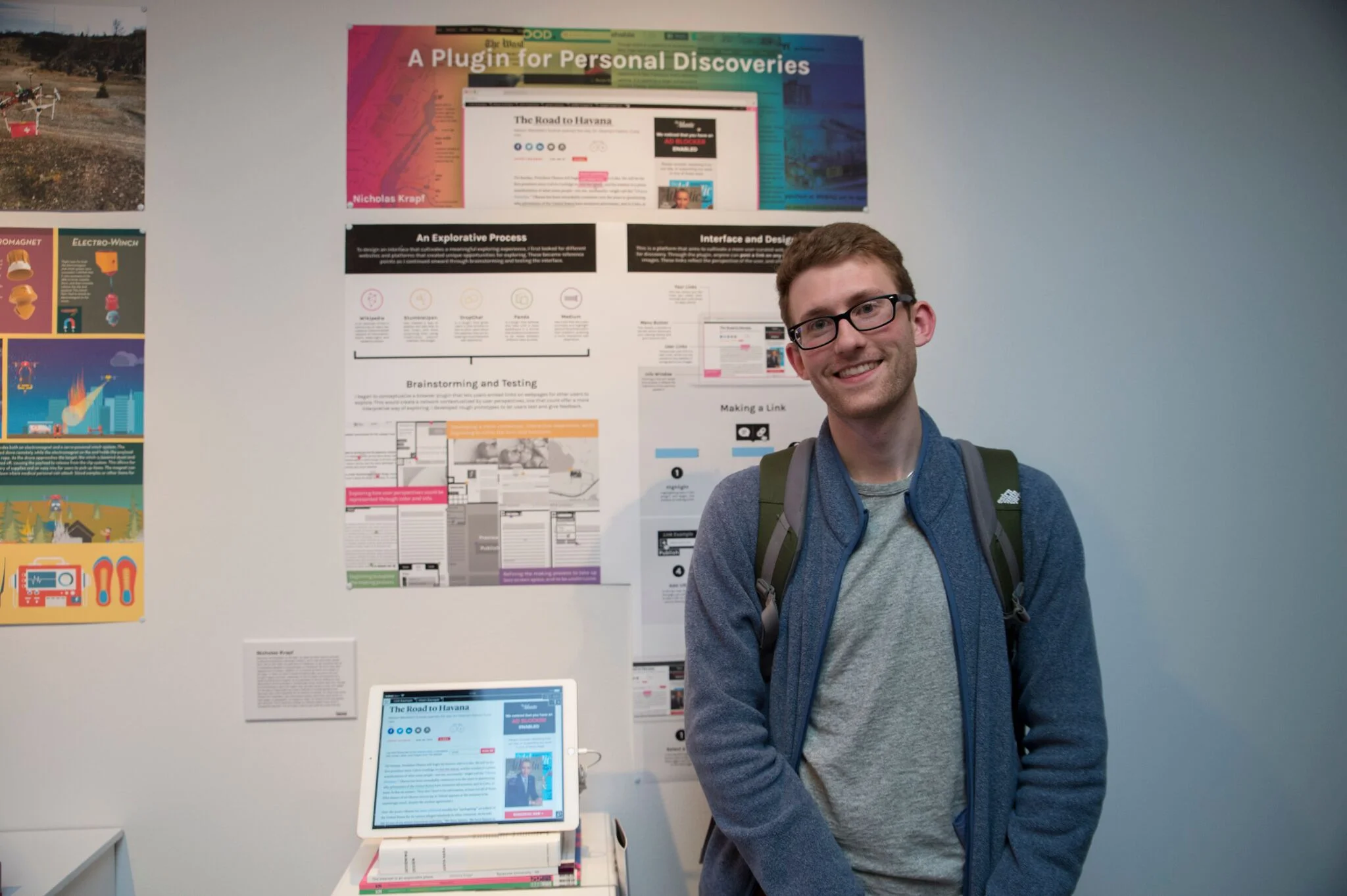
This is me standing next to my thesis/capstone display. I don't look it, but I was really tired :’0


Next Case Study:

Ethnographic Design →