Timeline: 2 weeks, March 2020
Project Type: Concept
Resources and Tools: Milanote, Balsamiq, Sketch, InVision
Primary Responsibilities: Market analysis, guerilla research, personas, experience mapping, interactive prototyping, usability tests
Understanding the Market
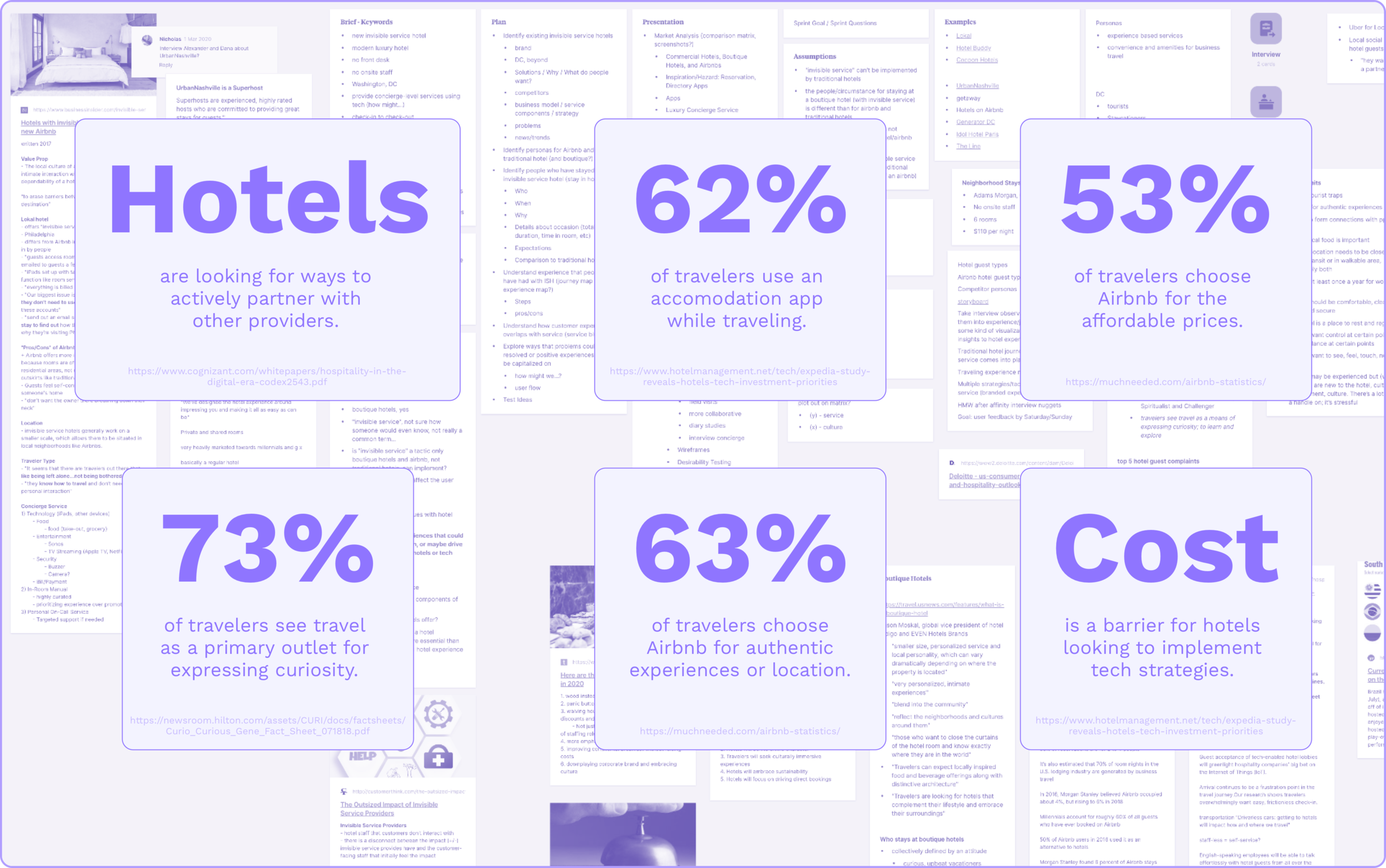
I began looking for information that would help me understand the state of the lodging industry. What are challenges are hotels facing? Who are the players? What are the consumer trends?
I scanned online for reports detailing the state of the industry and making predictions about the future. In general, hotels (large and small) are looking for ways to 1) attract millennials and Gen Z guests, 2) reduce cost (through technology or local partnerships) and 3) provide a more immersive traveling service.
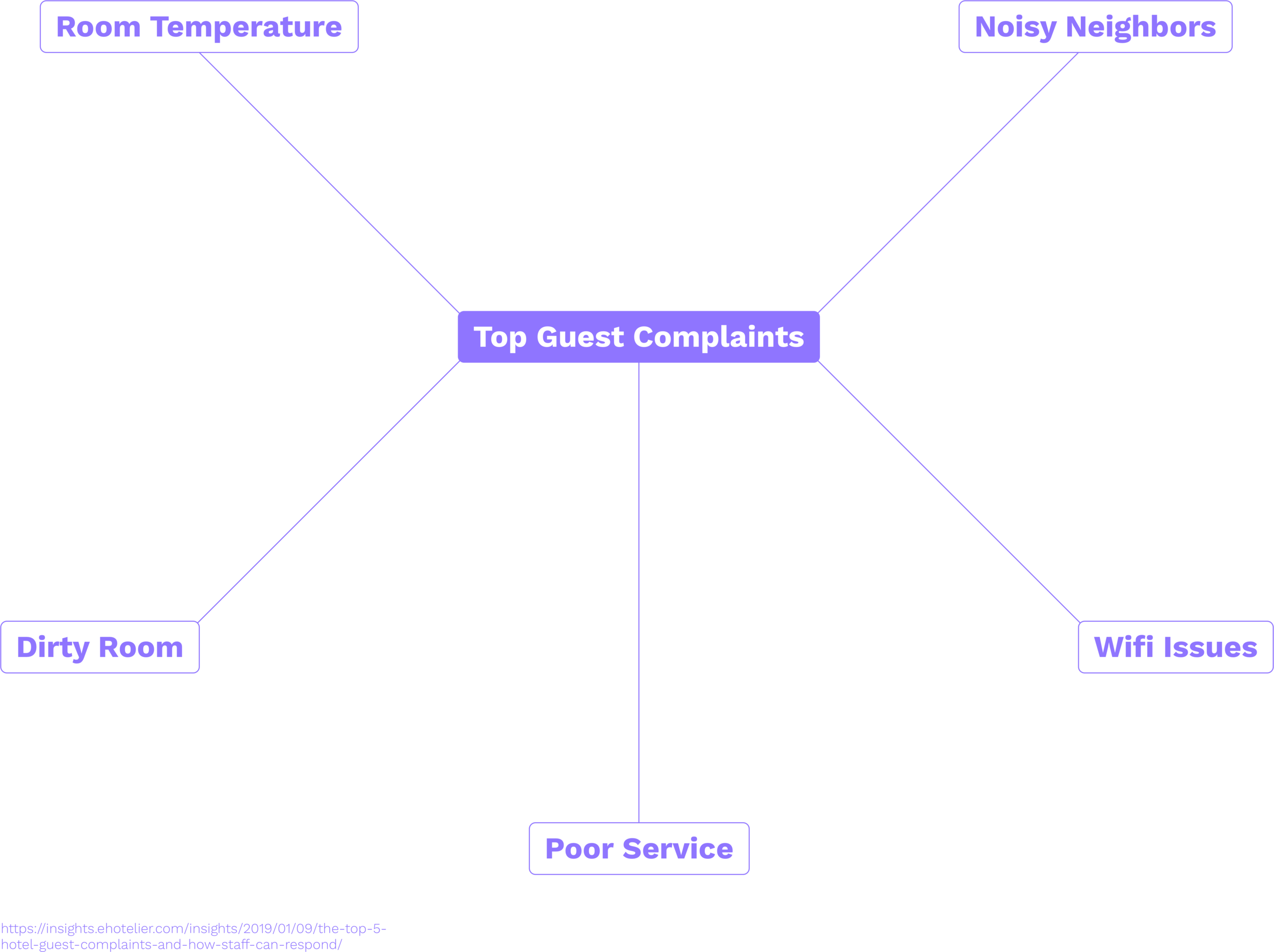
A study conducted by eHotelier analyzed the data of a popular hospitality ticketing app, and found there were a set of recurring guest complaints.
The Burgeoning Staff-Less Hotel Market
If one hears “staff-less” hotel for the first time, they might think of robots replacing the traditional hotel staff, or think of something like Airbnb. Truth is, there aren’t many lodging services that have successfully implemented a staff-less model.
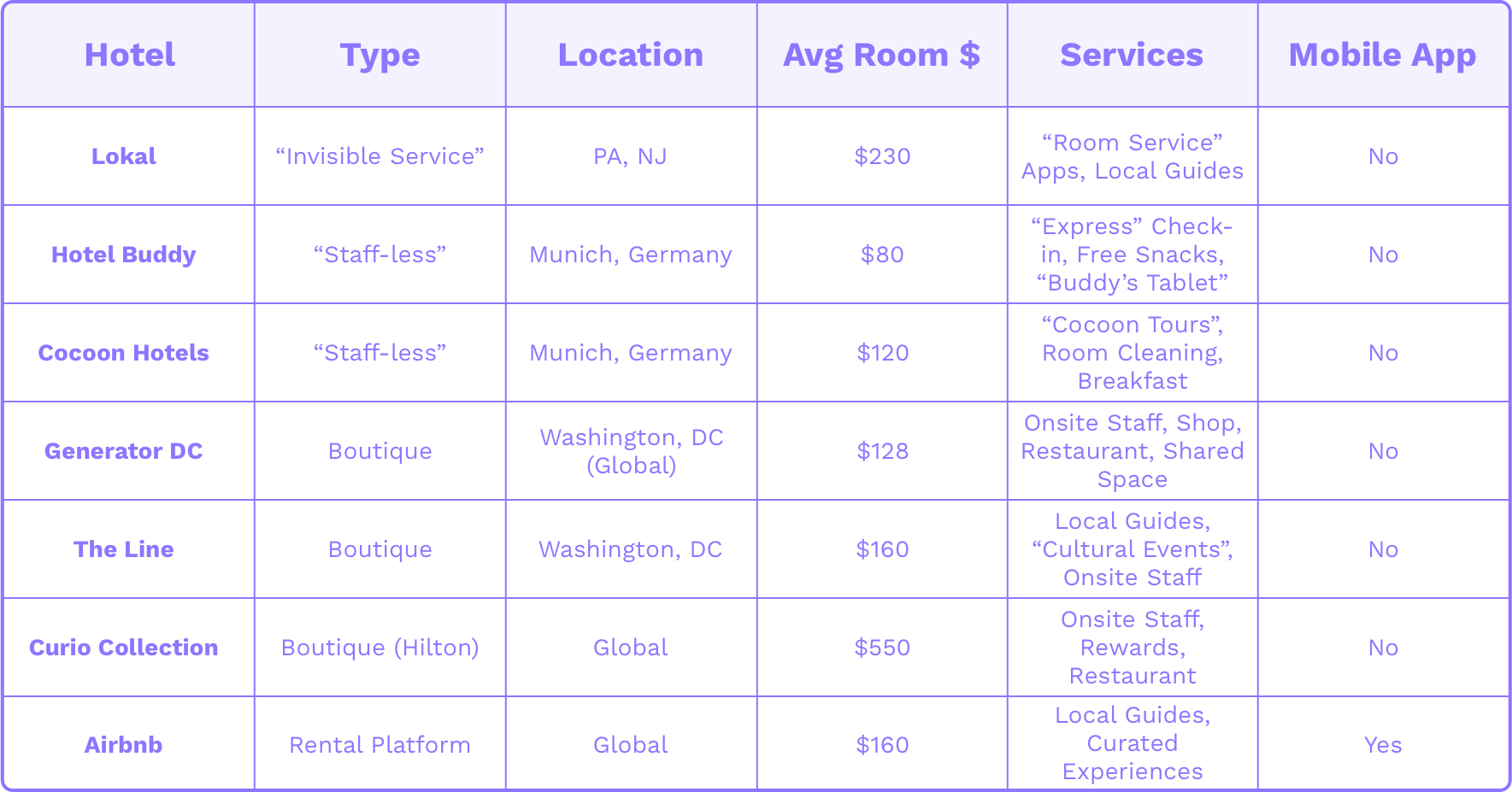
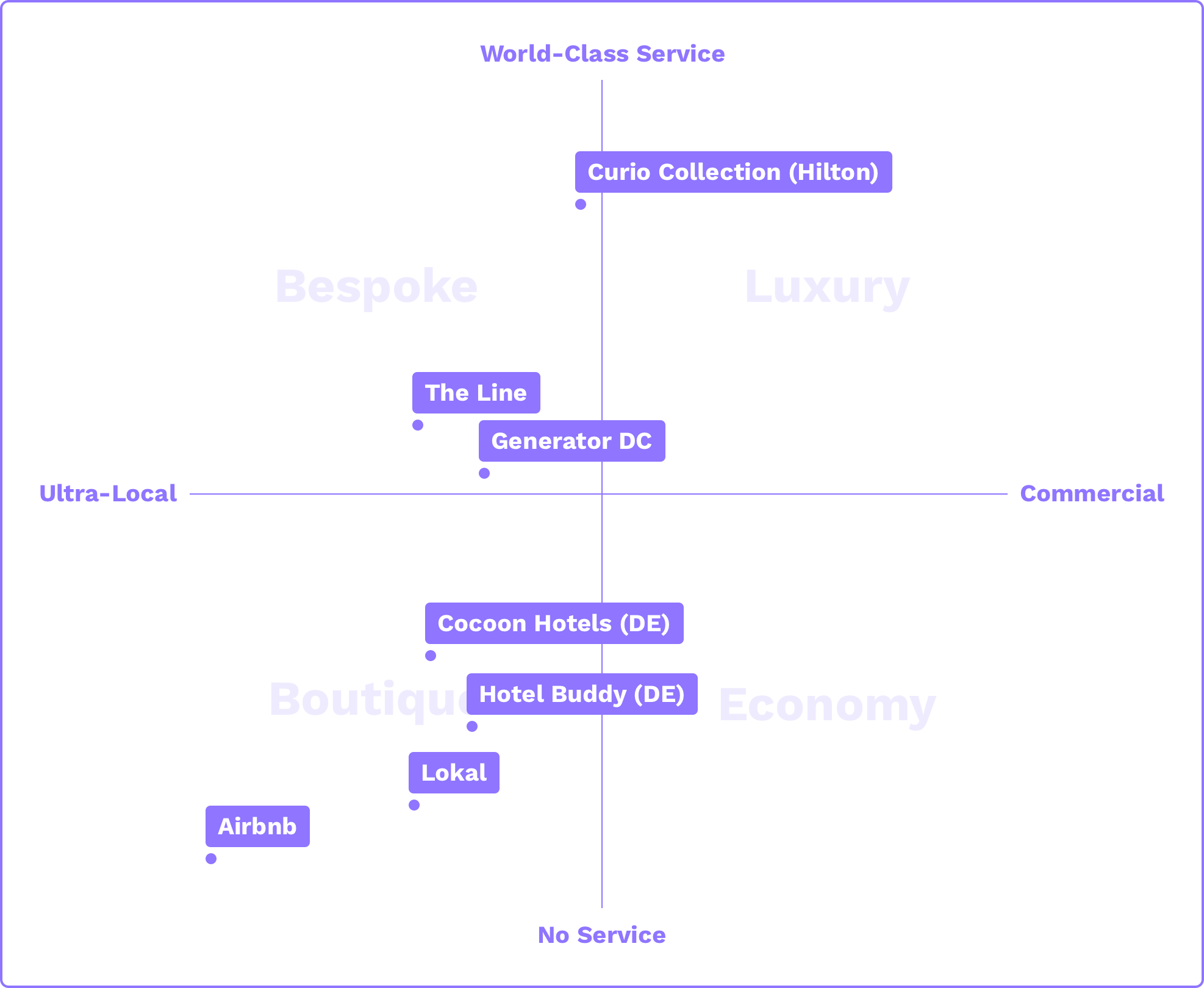
I found a handful of hotels that did brand themselves as “staff-less”, and compared them to hotels that could be considered competitors to look for similarities and differences.
Competing with the “Local Guide” Market
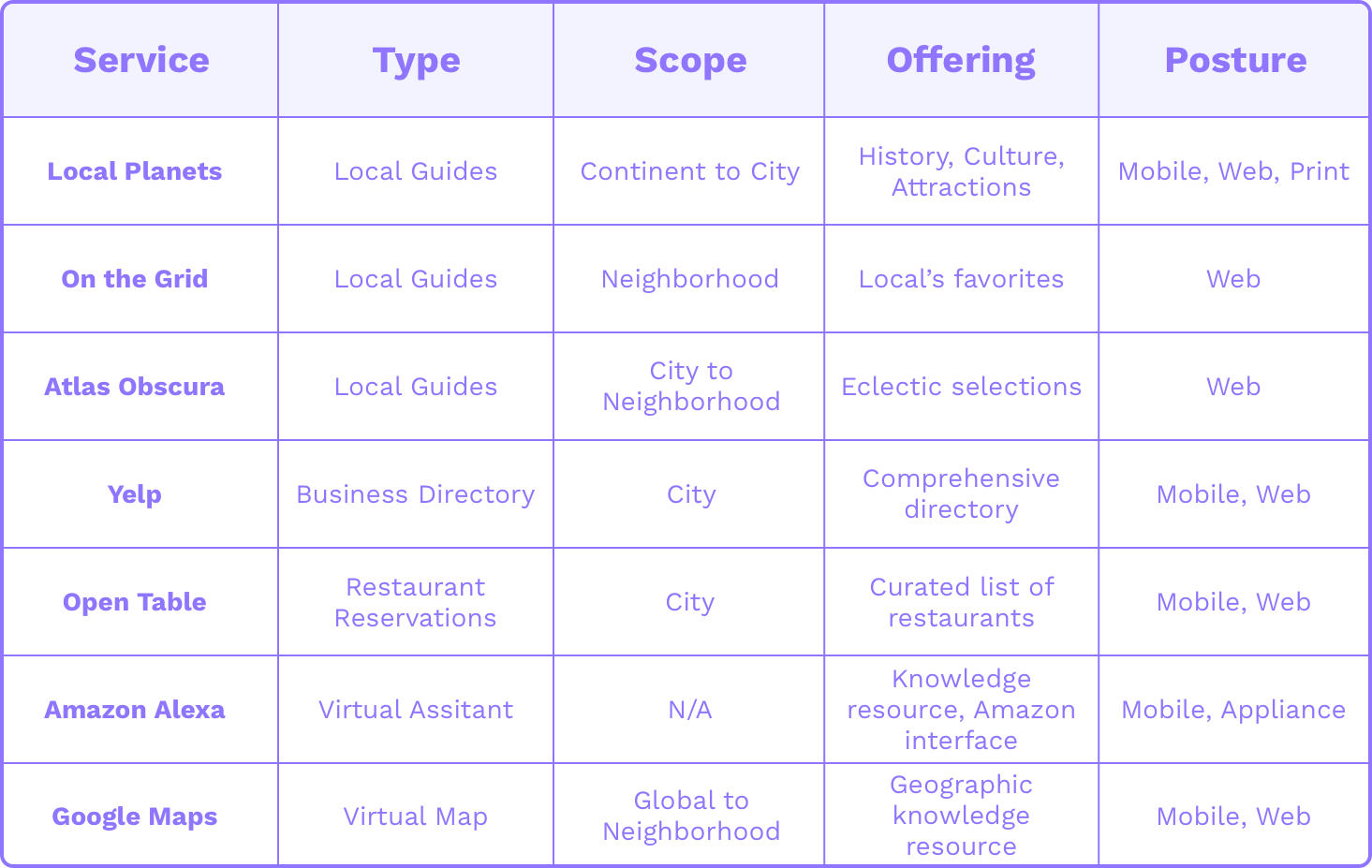
Considering that traditional hotels provide recommendations through their concierge services, I decided to look at popular services that provide local guides, tips, and recommendations.
How do concierge services compare to online local guides in the mind of traveler? How might hotels provide more of this kind of service without competing head on with existing solutions?
Takeaways
Investing in tech: Hotels are looking to use tech and are actively exploring different solutions to provide new services to guests.
Staff-less vs traditional vs Airbnb: Millennials, the coveted market of the lodging industry, might prefer Airbnb over other options, so what could a staff-less hotel offer to compete with Airbnb?
Providing local advice: There’s an opportunity to provide more local advice to guests. But if that advice service app-ified, what will make it stand out from the existing successful services available to travelers?
Understanding Travelers as Hotel Guests
Having a basic understanding of the lodging market, I wanted to learn more about travelers, their lodging experiences and preferences.
With a limited amount of time to conduct primary research, I decided to leverage guerrilla research to find travelers willing to share their perspective on traveling.
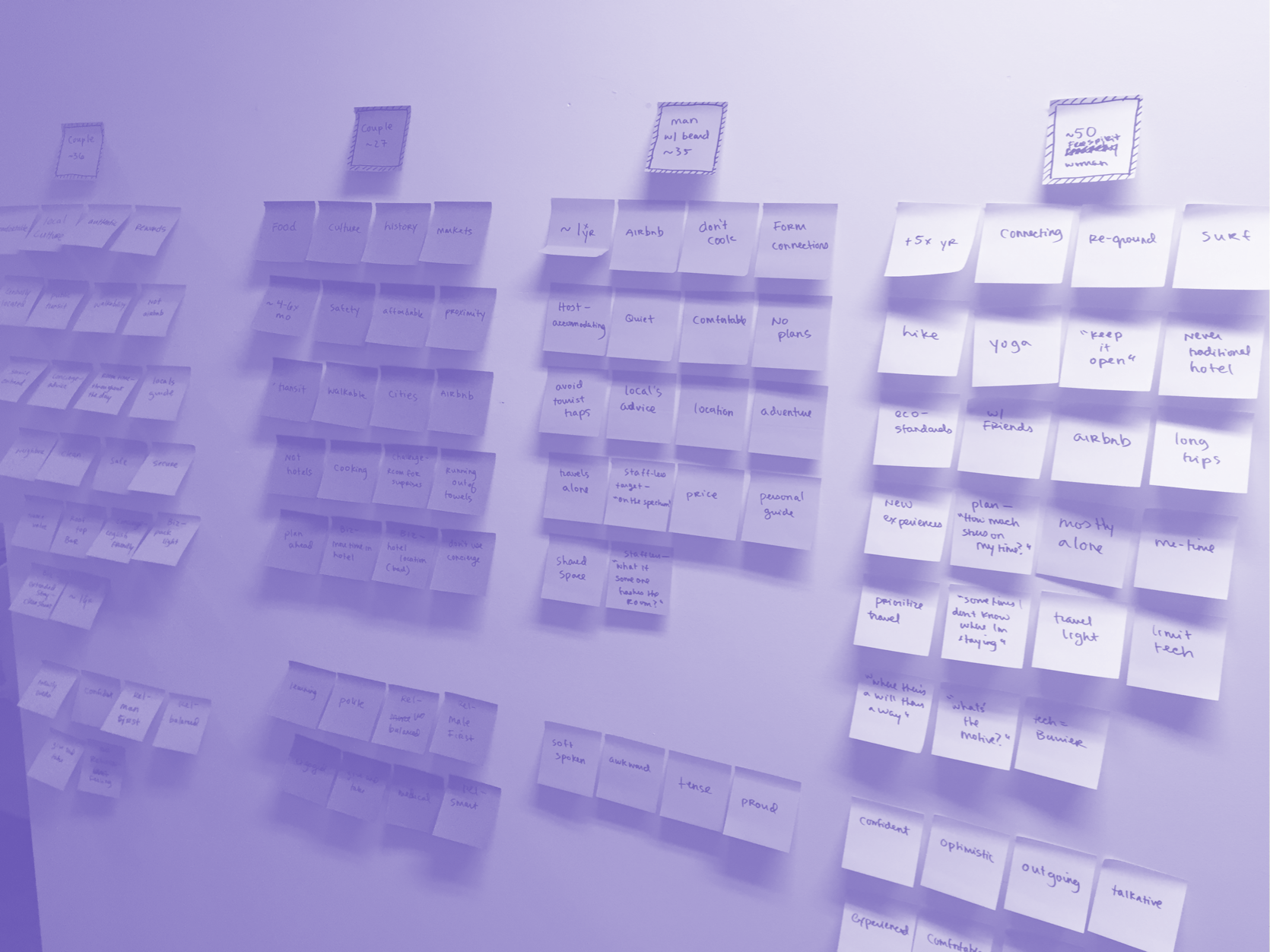
I interviewed 2 individual travelers and 2 couples about previous traveling experiences: how frequent they travel, what services they use (before, during, and after trips), how they plan trips, and pain points.
I converted my interview notes and observations into stickies, organizing them by interview.
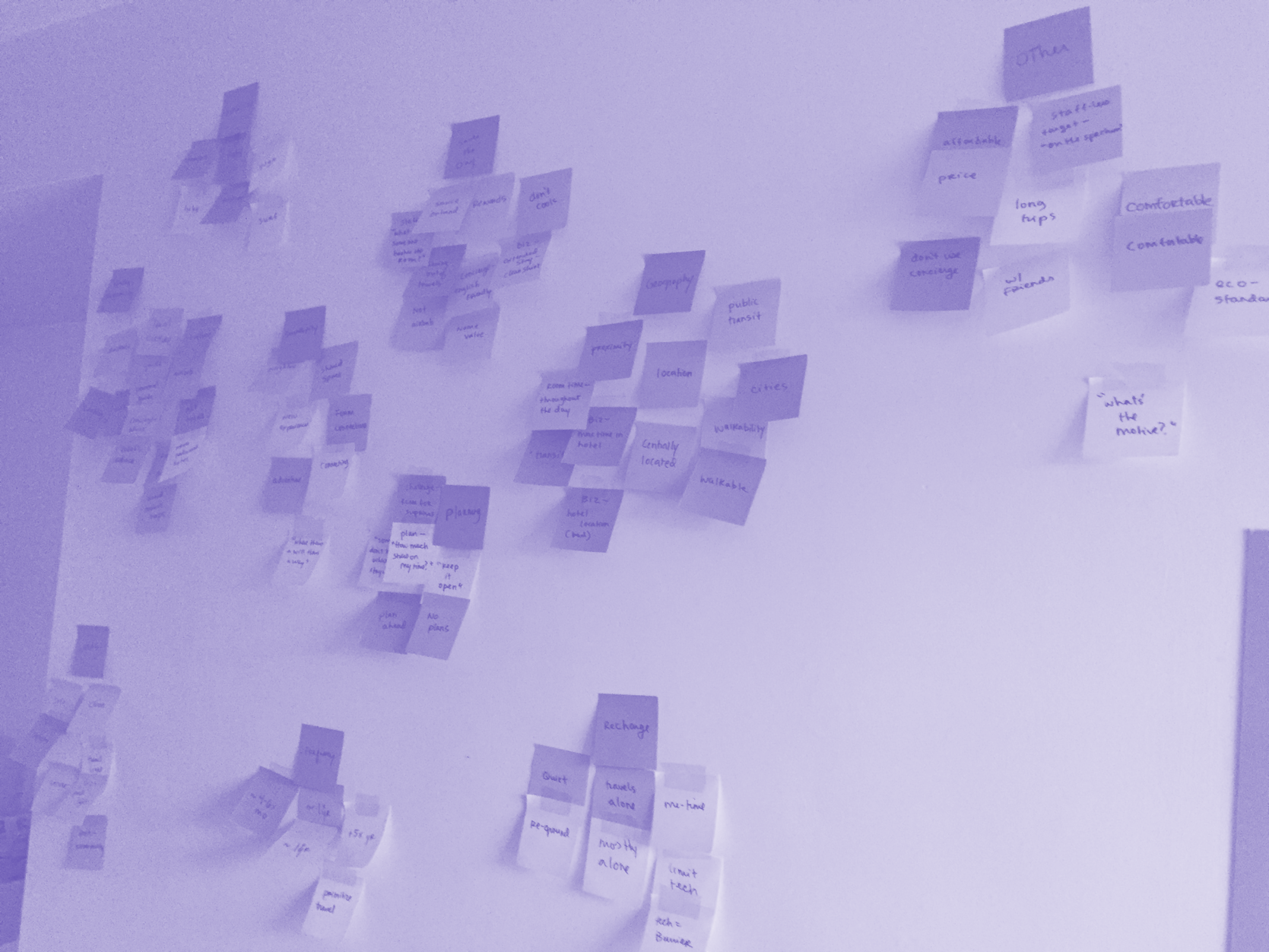
I then looked across the notes for themes.
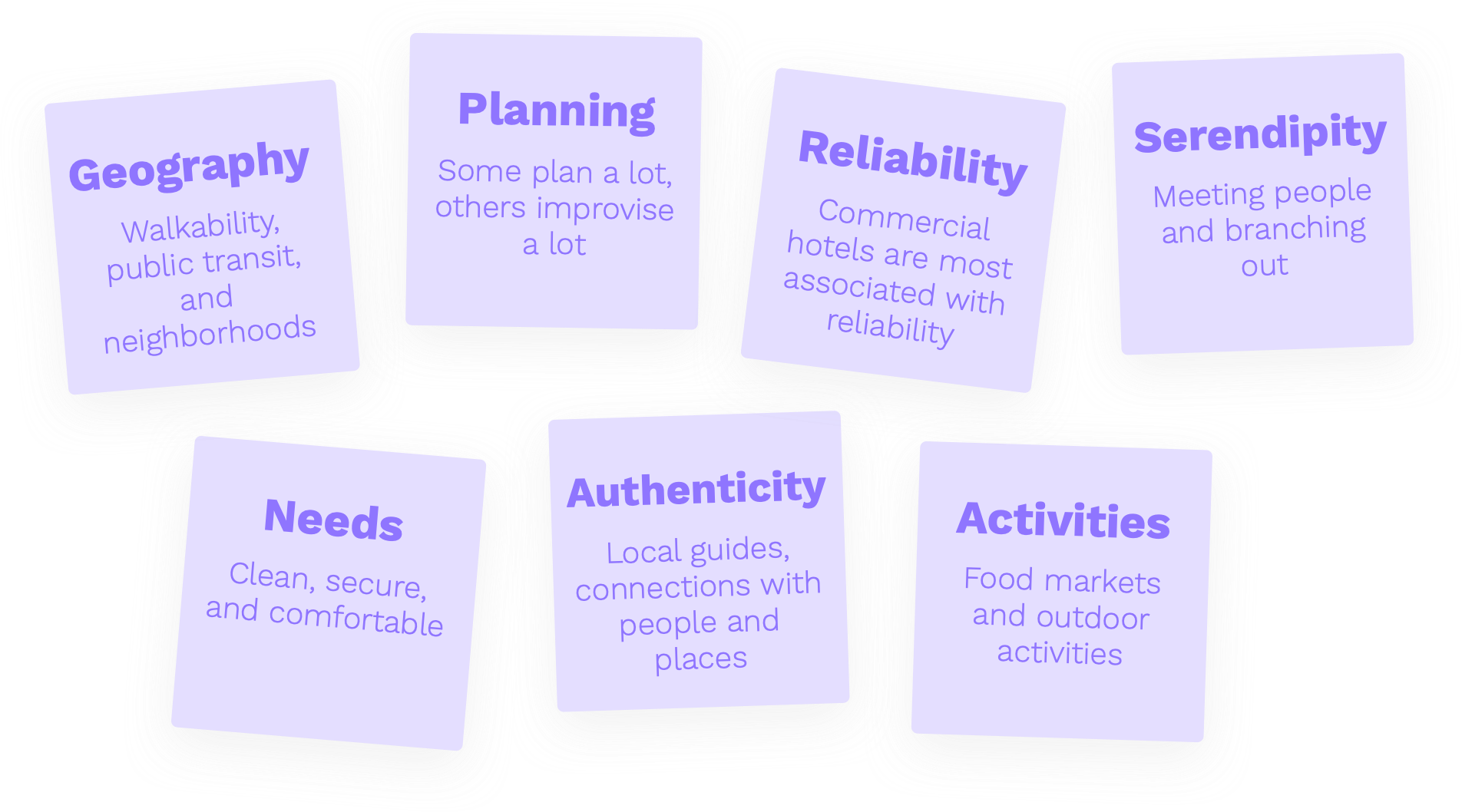
Themes concerning locality, discovery, and learning emerged as common points of emphasis across all the participants, while themes concerning planning preferences and needs drew more differences.
Muses
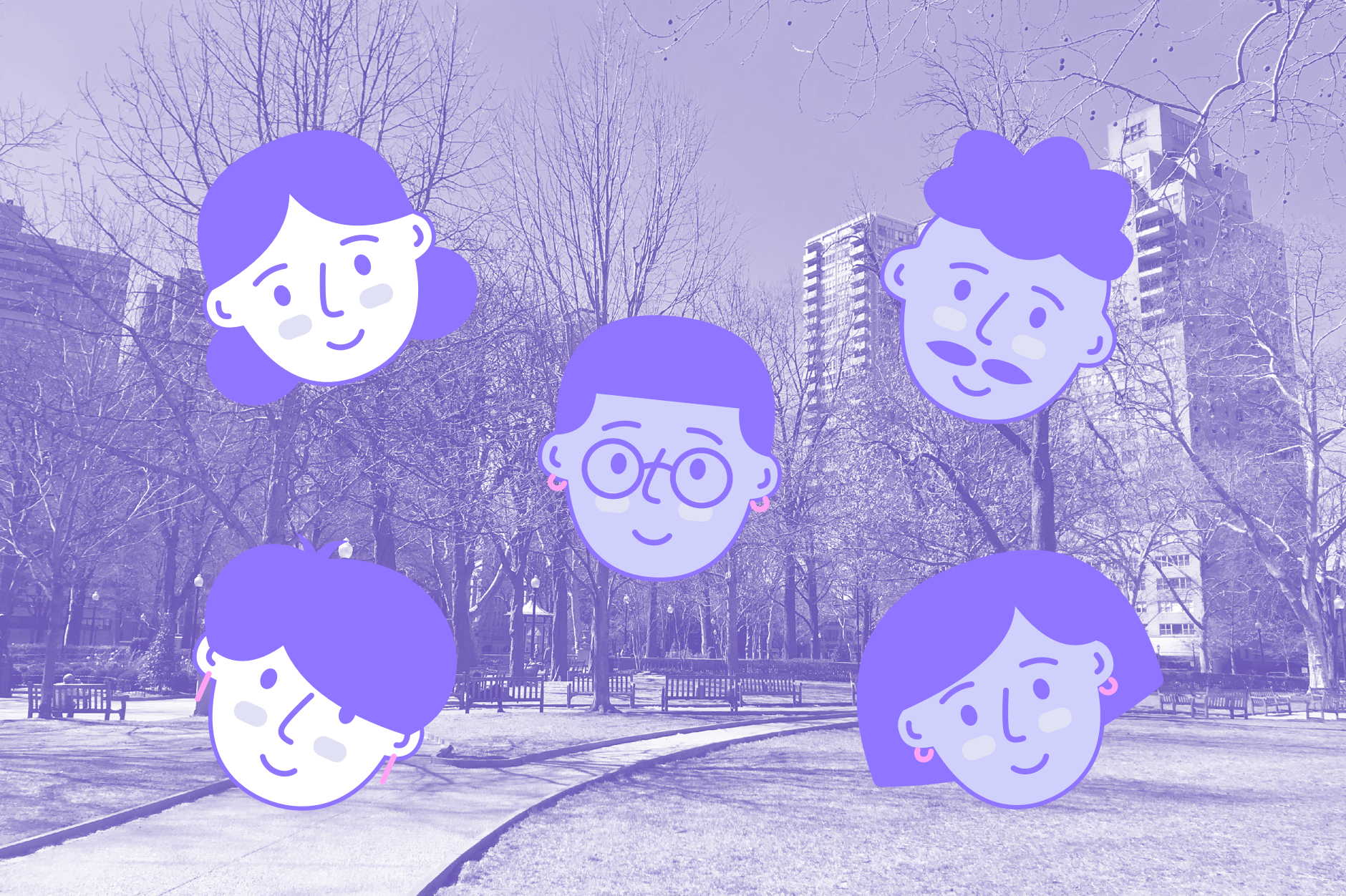
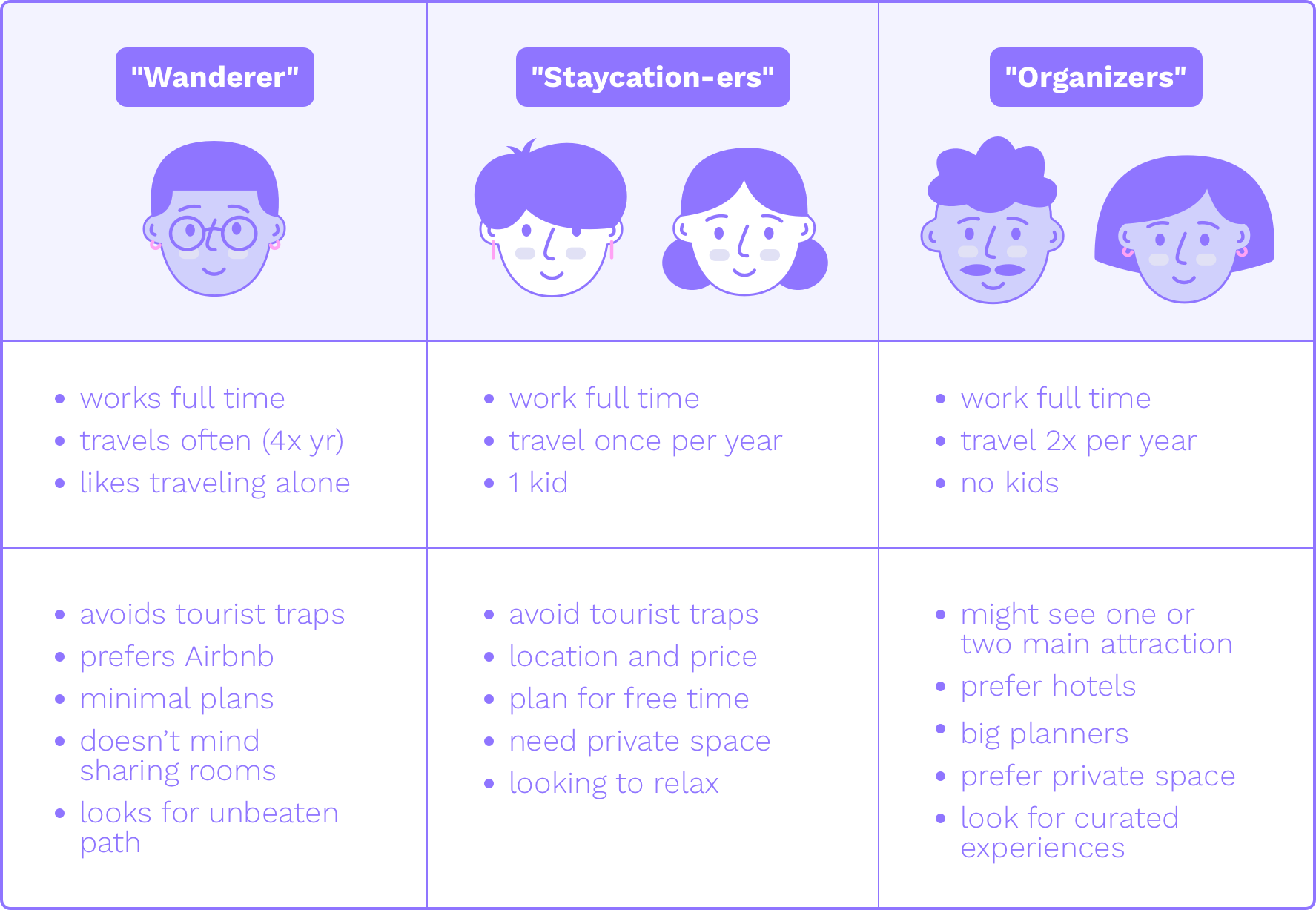
To help congeal my findings across the market analysis and the guerrilla research, I created fictional muses. These muses served to represent the lifestyles, preferences, and attitudes of guests who hotels might target.
Mapping the Lodging Experience
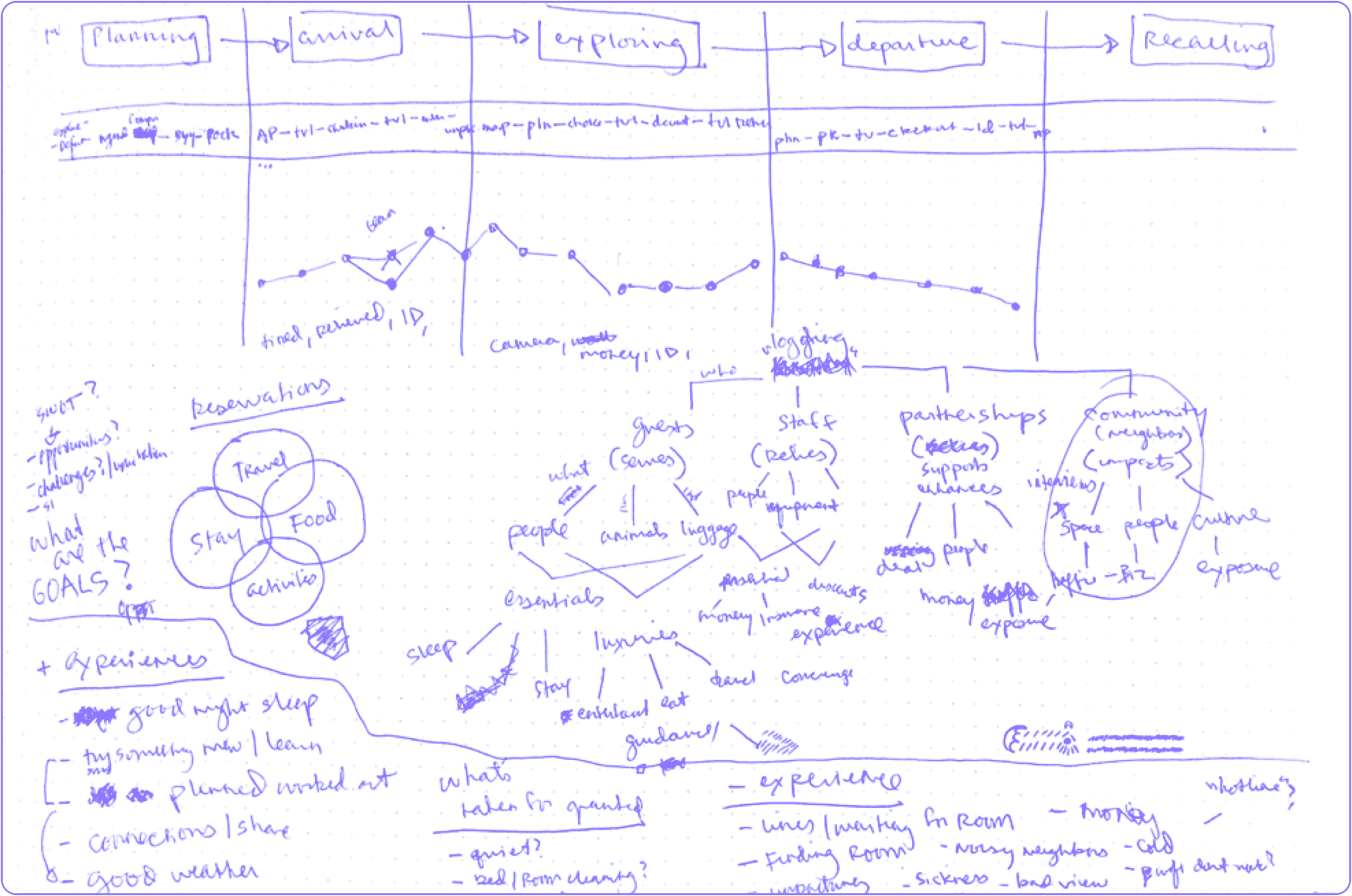
A guest’s stay starts before they arrive at the hotel. I mapped out the broader travel experience to look for opportunities where a hotel might provide new value.
I broke up the traveling experience into five phases, beginning with tasks/events that occur before the trip (eg. plan trip, reserve a room) and ending with tasks/events that occur after the trip (eg. offering recommendations).
I then explored different aspects of the travel experience—thinking about goals, stress level, device usage, and interaction between the hotel and guest across different channels.
Insights
Arrival/Departure is stressful: It’s a high-stakes game of hoop-jumping which compounds when navigating a new culture. How might hotels provide service that aims to reduce some of the stress?
Device usage follows stress patterns: Guests engage with multiple channels and services across the whole travel experience. Switching between these channels might also cause fatigue. Consolidating some of these touch points might help reduce the stress.
Recalling trip details can be a pain: Sharing experiences and offering recommendations to others who plan to visit the same destination is done mostly through photos. Some of this media is geo-tagged but not always so. Keeping track of restaurants and sites might be a useful feature for guests.
Exploring Ideas
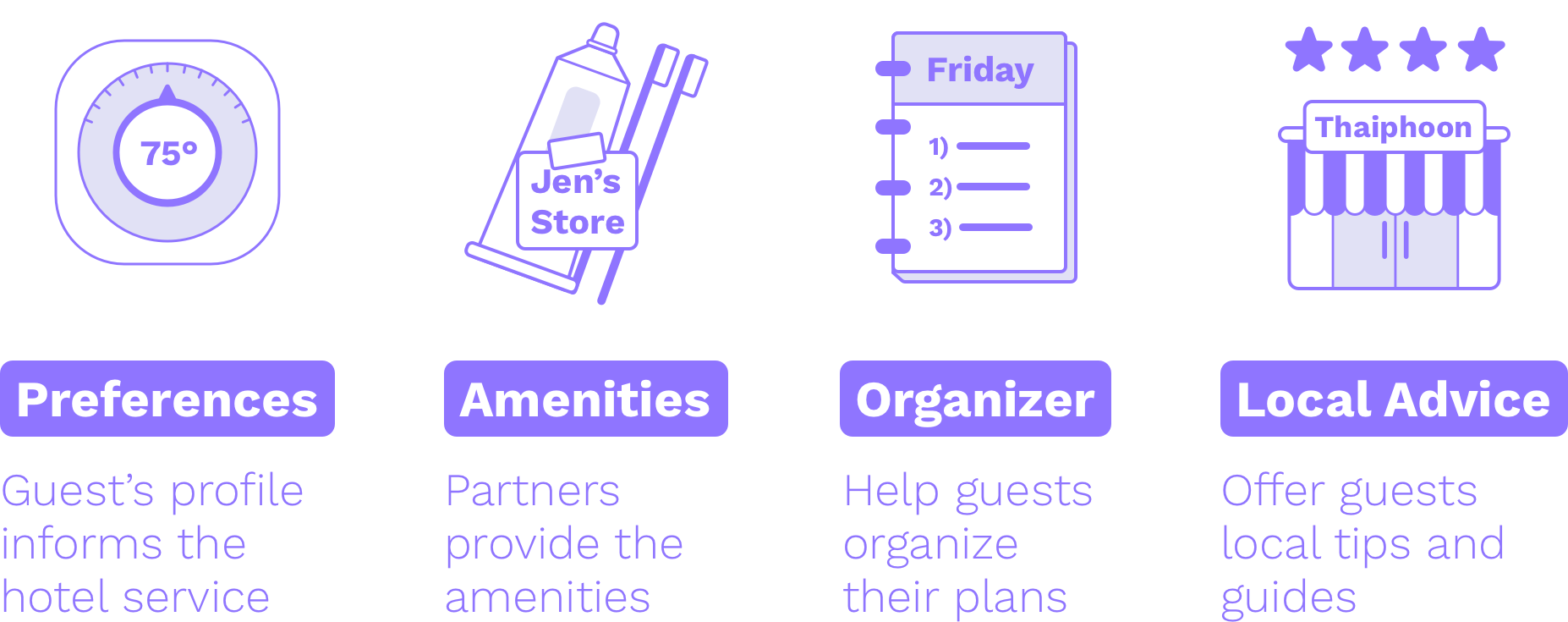
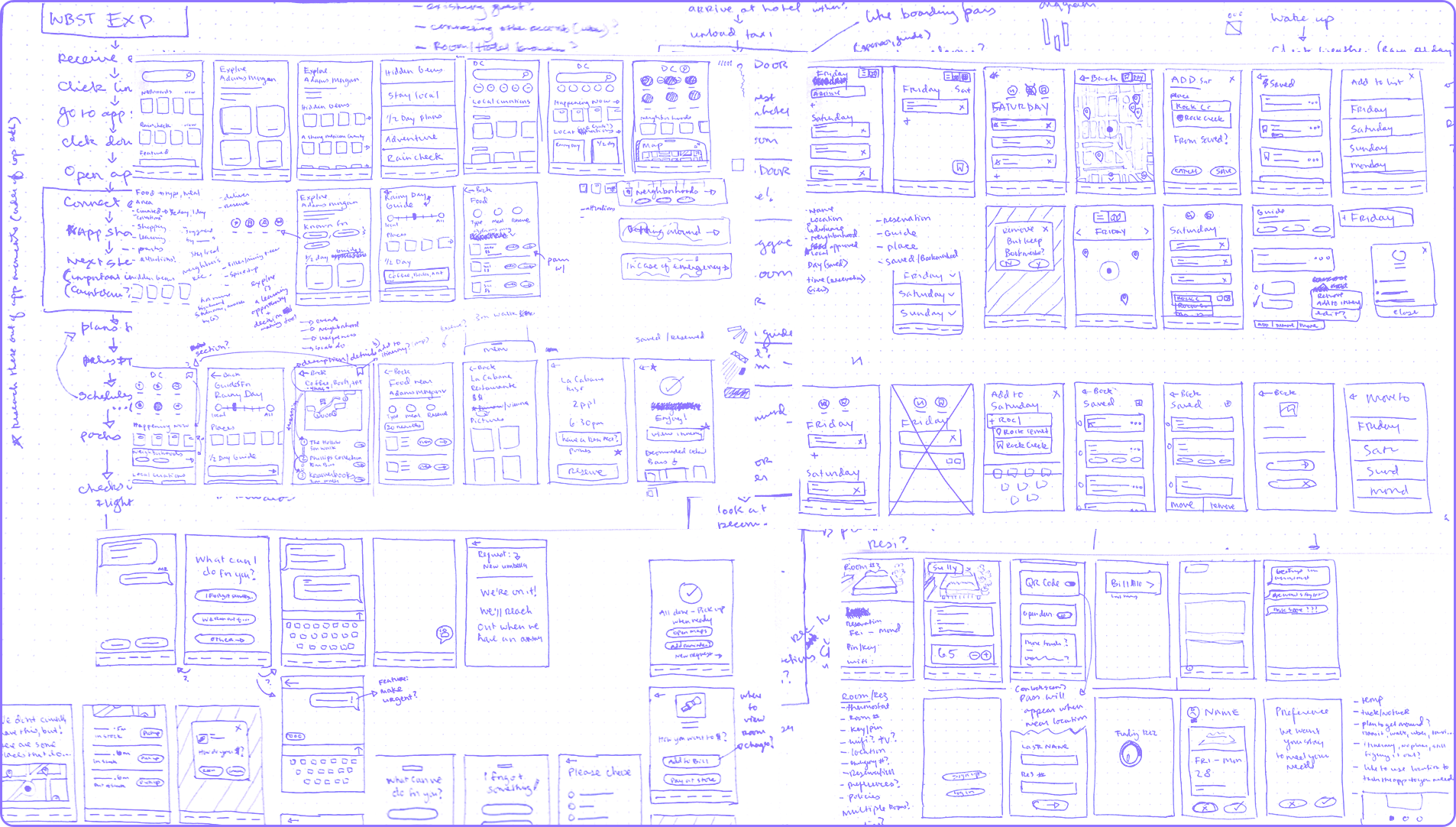
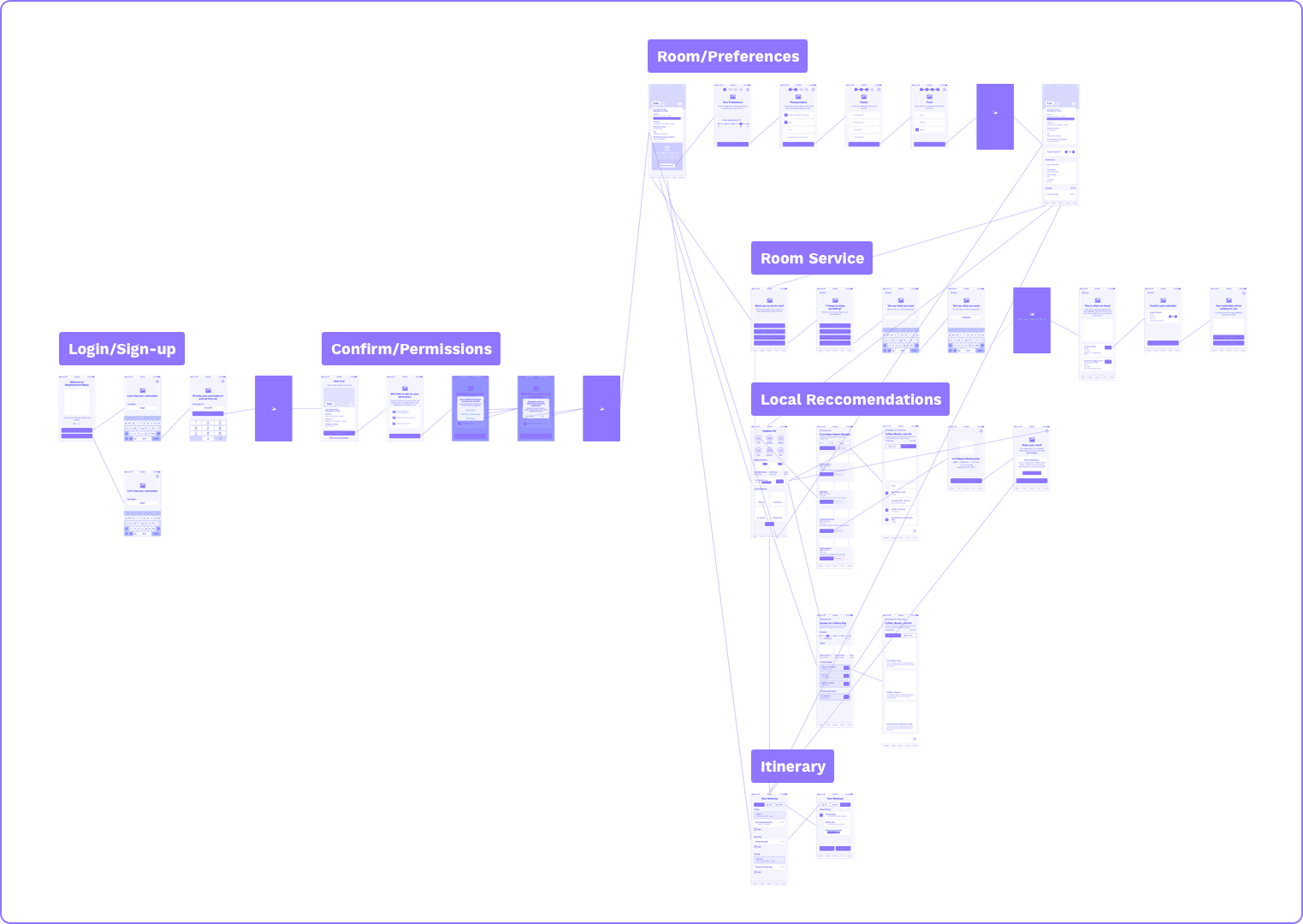
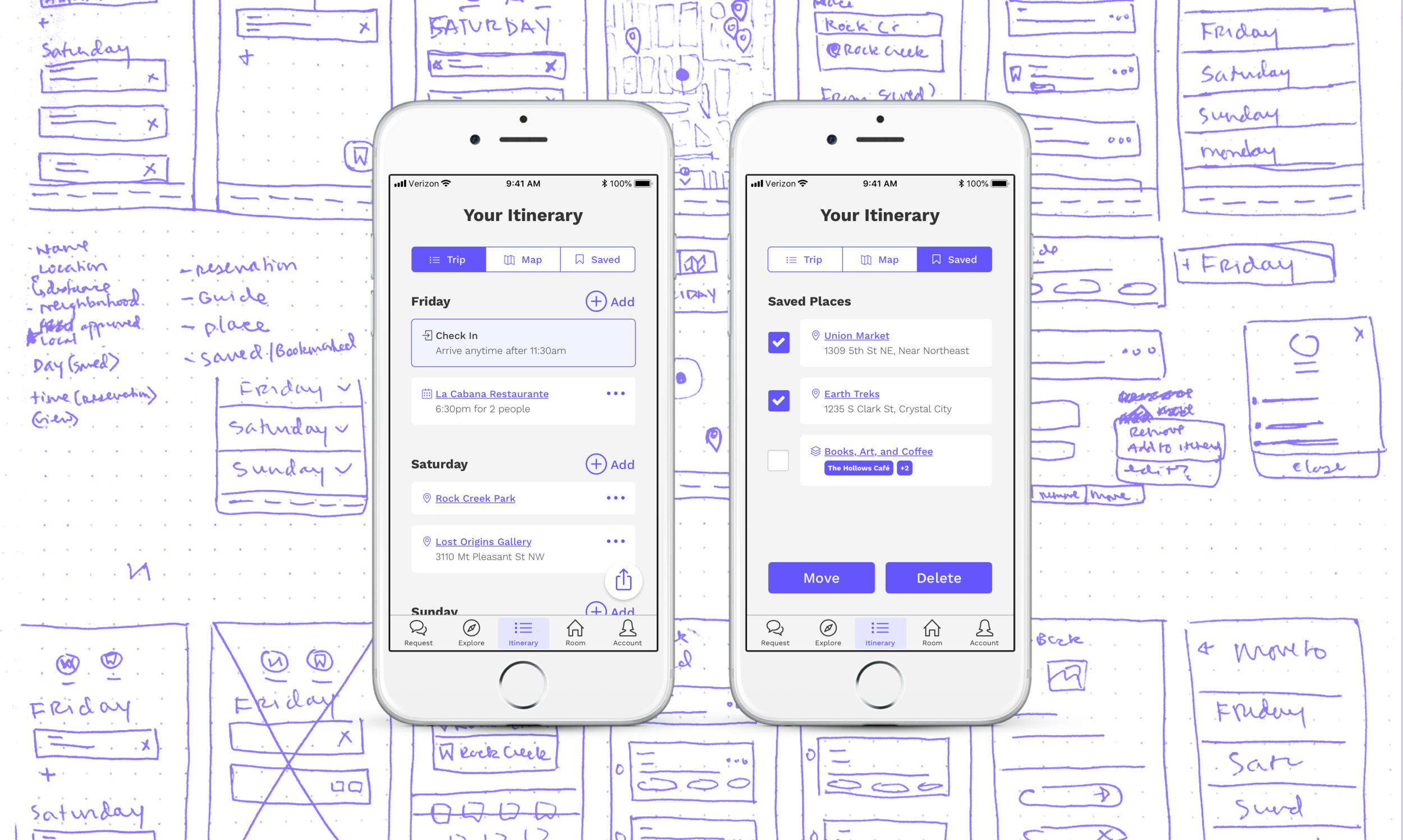
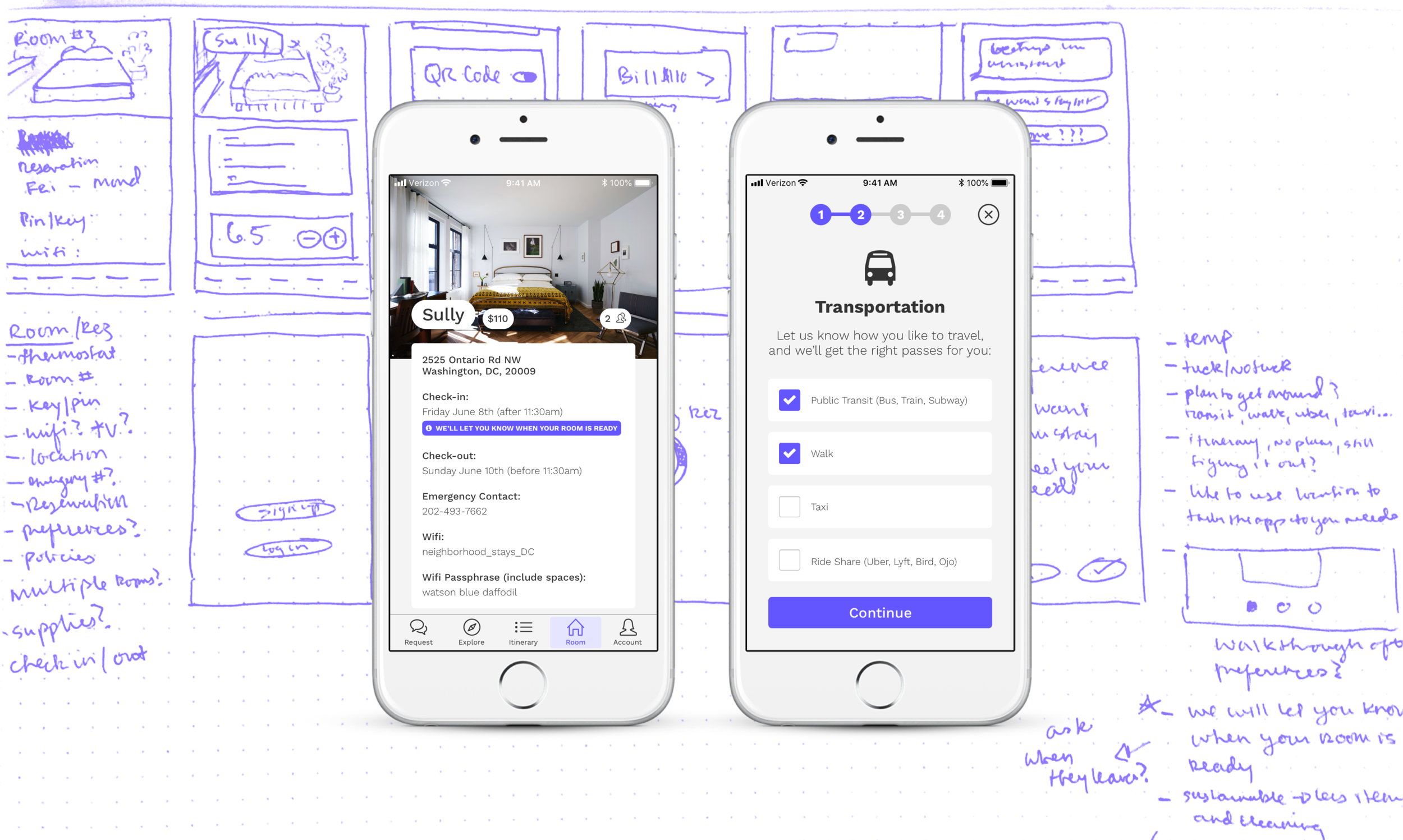
With a sense of the market, travelers’ preferences and pains, I started exploring features that a staff-less hotel could provide through a mobile app.
Feature Ideas
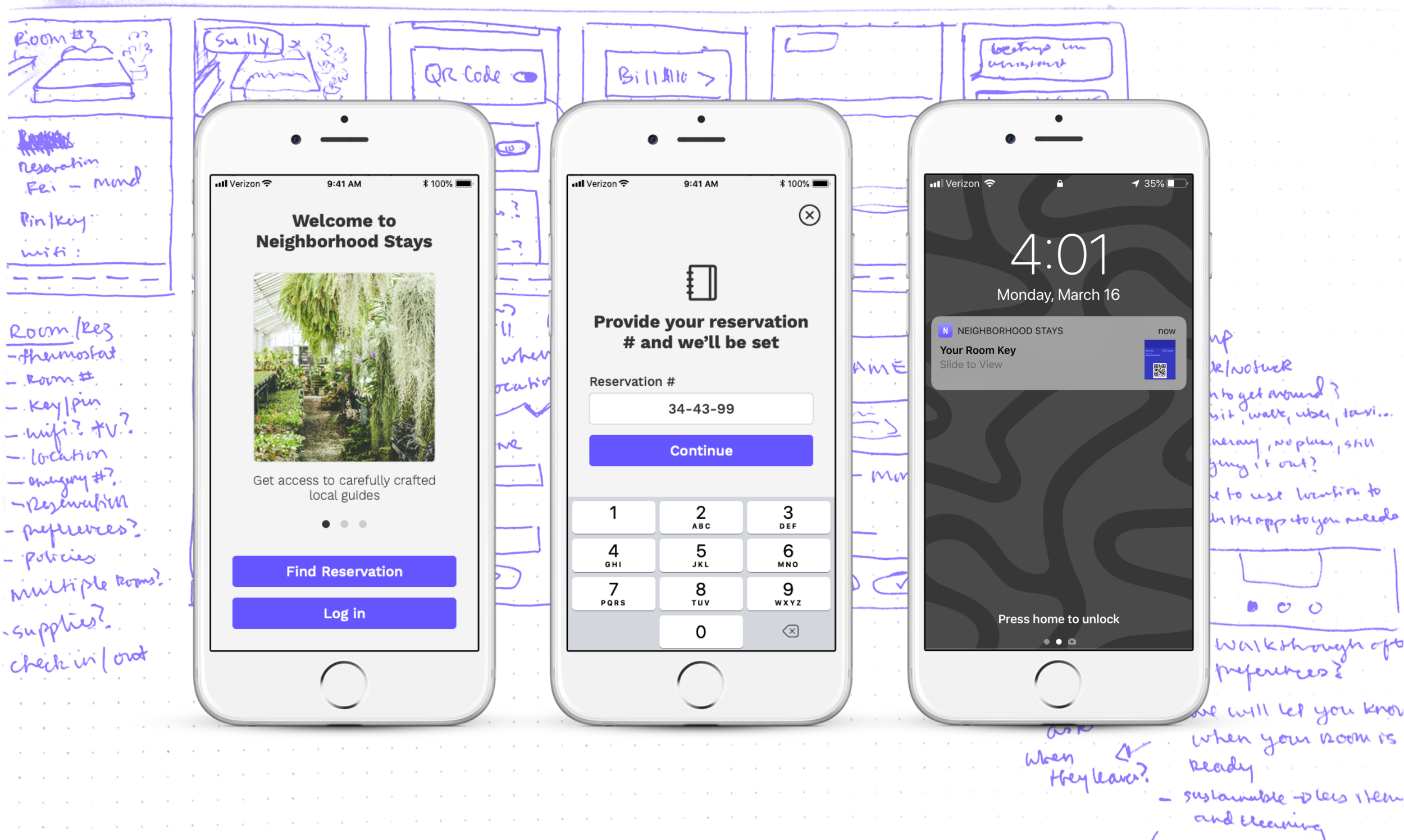
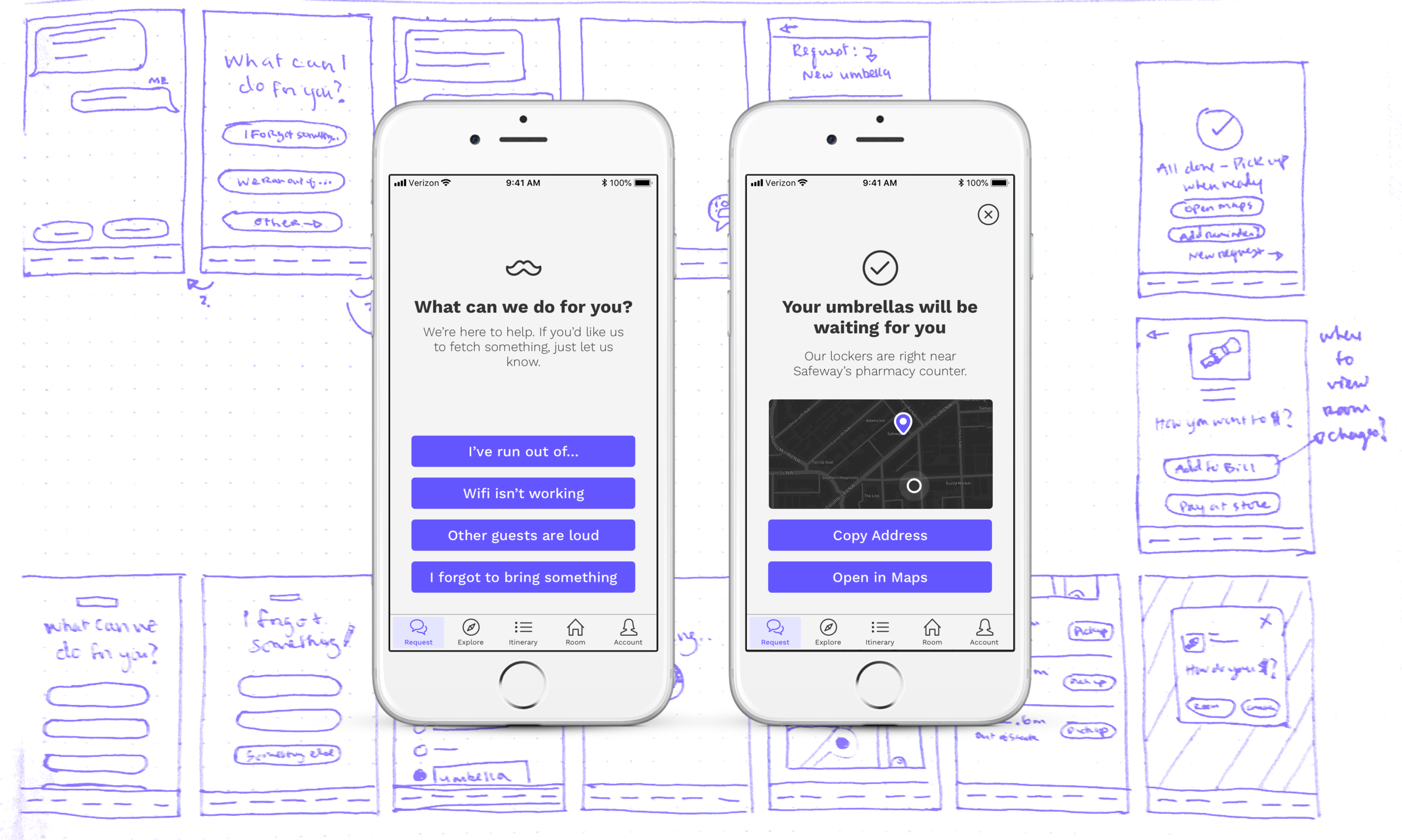
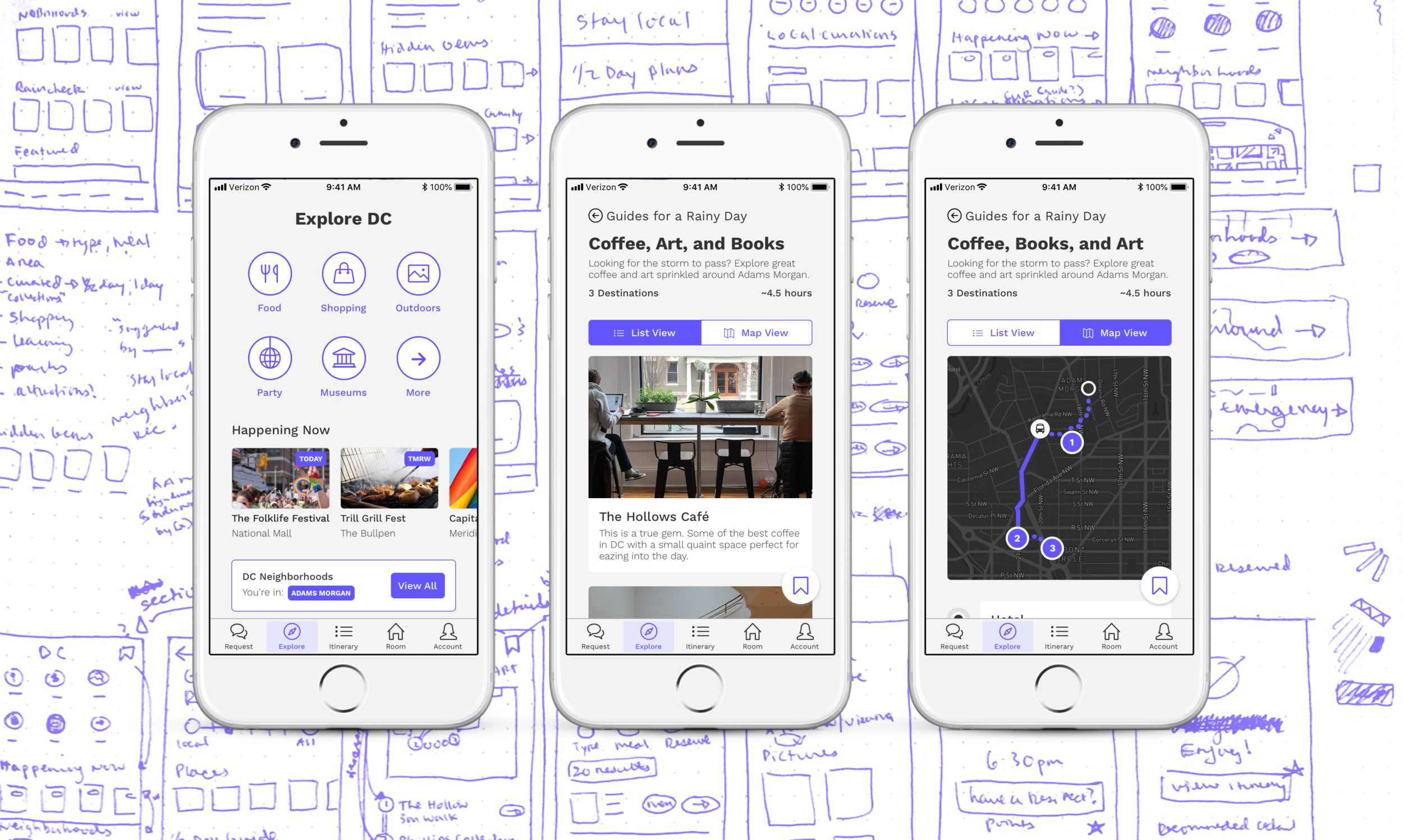
Final Design and Feedback
Initial Feedback and Takeaways
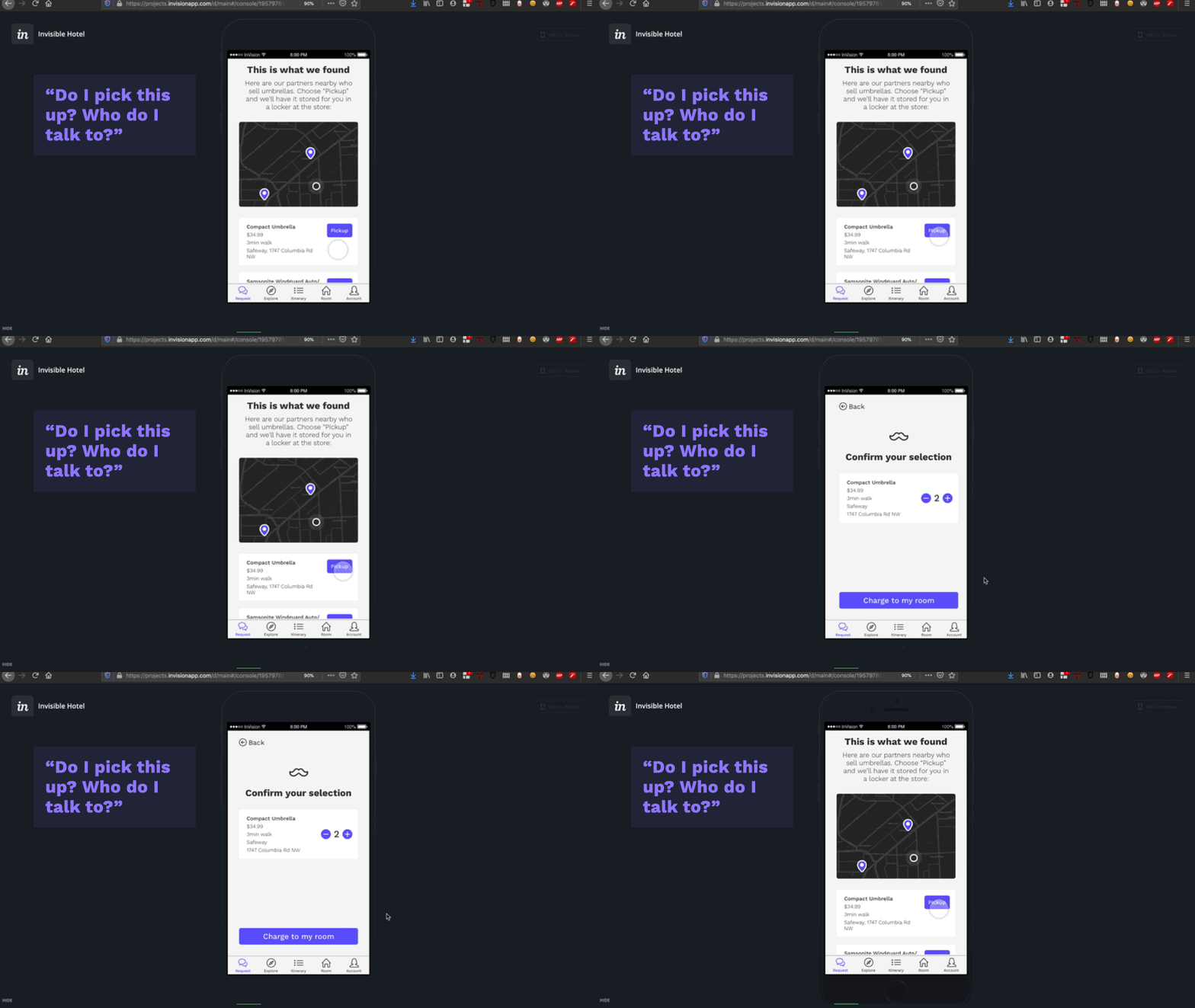
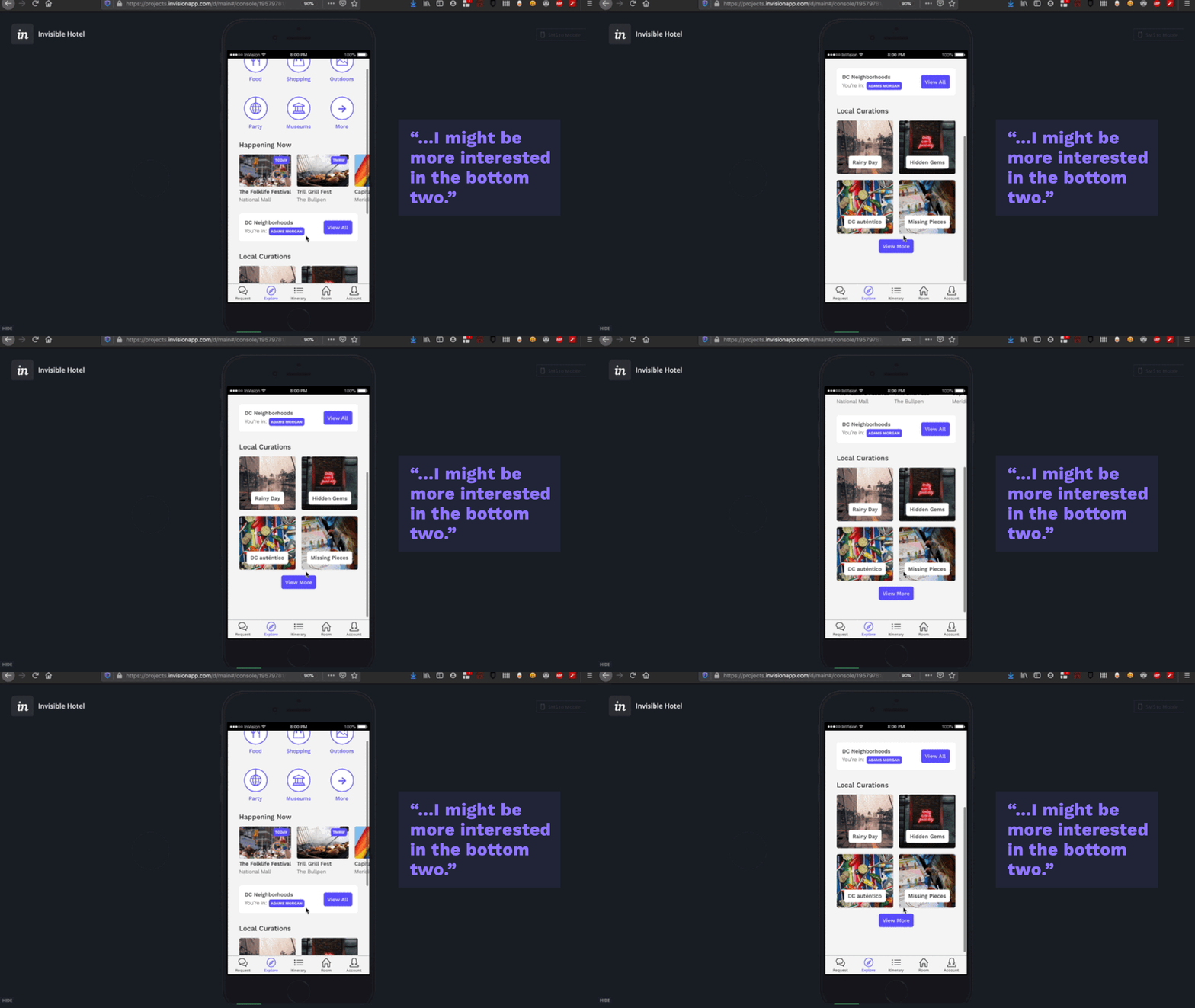
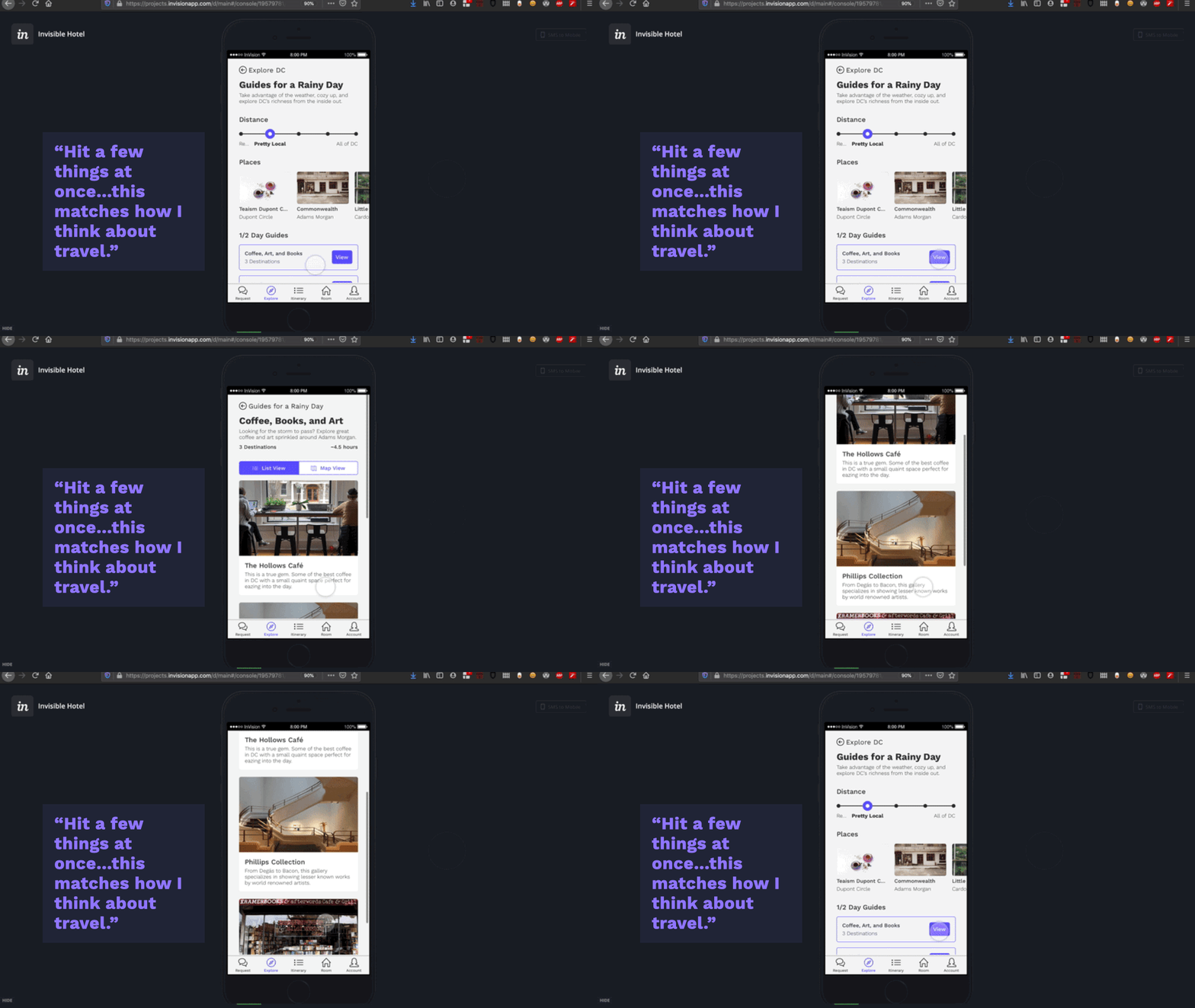
I was able to get one potential guest to walk through the app as they might if they had just downloaded the app. This provided some perspective on the usefulness of the app and on its usability.
Taking advantage of perspective: A hotel will have it’s own perspective and voice. Embedding this into the guides and ratings would reinforce the perception of the hotel as a “local” who’s in the know.
More time for research: I made a lot of assumptions about users and didn’t get a lot of time to vet features. With more time, I’d want to conduct a diary study of guests, possibly shadow concierge staff, and facilitate a workshop exploring ways an app could really provide value to guests.